Sip VoIP Guide: Essential Insights for 2025
Unlock the future of business communication with this 2025 SIP VoIP guide. Discover key benefits, trends, and step by step insights to modernize your organization.
Iacopo Bonandi, Founder & CEO
November 11, 2025Business communications are changing at lightning speed, with new technologies shaping how companies connect and collaborate. As we approach 2025, sip voip stands out as the game-changer every organization needs to understand.
This guide cuts through the complexity, giving business and IT leaders the clarity to modernize their communication strategies. You will learn the essentials, from sip voip fundamentals and key differences from traditional phones, to the benefits, latest market trends, and practical steps for successful implementation.
Ready to unlock cost savings, powerful features, and future-ready communications? Follow this guide to stay ahead.
SIP VoIP Fundamentals: What It Is and How It Works
The world of business communications is rapidly changing, and understanding sip voip is now essential for IT leaders. This technology is not just about making calls over the internet, it is the foundation for unified, flexible, and secure communications in 2025.
Defining SIP and VoIP
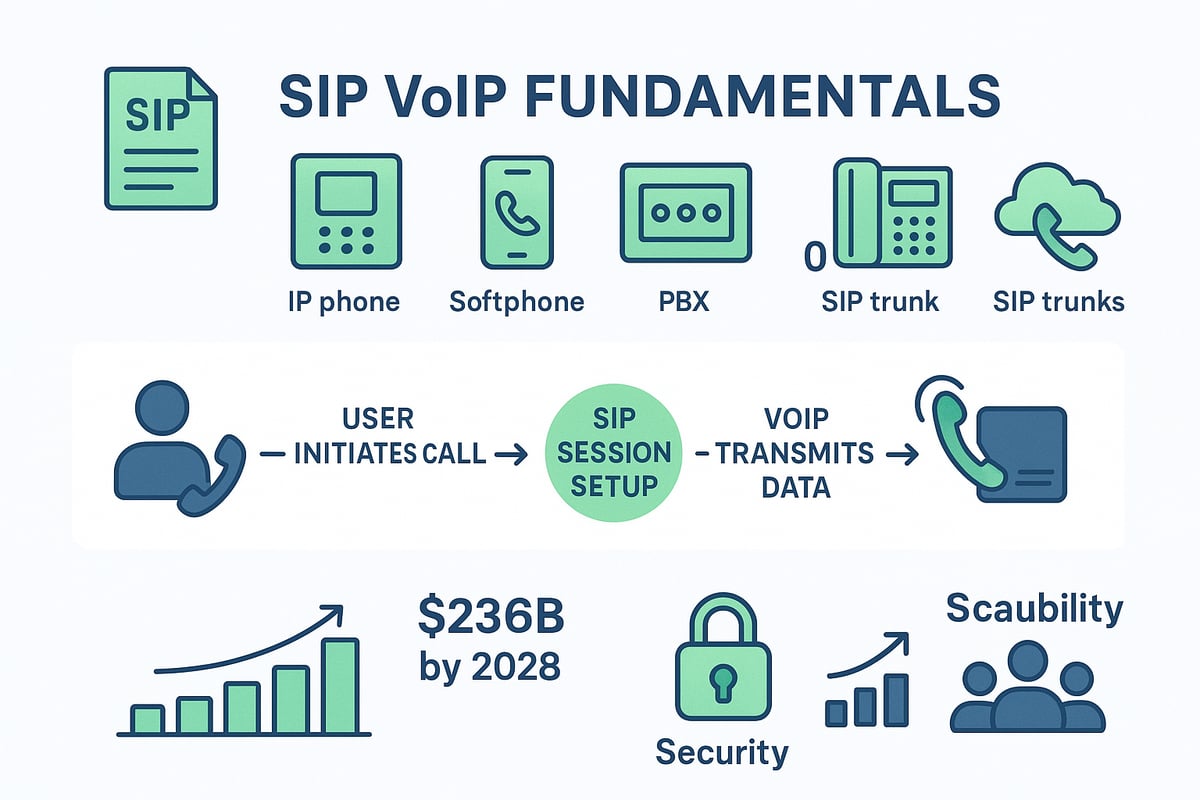
Session Initiation Protocol, or SIP, is a signaling protocol that initiates, manages, and terminates multimedia sessions. It is the backbone for many modern communication tools, handling the setup and teardown of calls, video conferences, or even instant messages.
Voice over Internet Protocol (VoIP) is the technology that transmits voice and other media over IP networks. While VoIP delivers the actual audio or video data, SIP provides the rules and framework to make these connections possible. This synergy allows businesses to use sip voip for far more than just voice calls, enabling video meetings, messaging, and file sharing all on the same network.
For example, a single sip voip system can let users start a video call, send an instant message, or share documents with colleagues, all seamlessly. Although VoIP can use other protocols, SIP stands out for its flexibility and broad support for unified communications. The market is responding, with projections showing global VoIP services reaching $236 billion by 2028. This explosive growth is driven by organizations seeking to transcend legacy telephony and empower distributed teams. For a deeper look, see the SIP phone system basics guide.
SIP VoIP Architecture and Components
SIP voip relies on a set of core components that work together to deliver modern communications. Key endpoints include IP phones, which resemble traditional desk phones but connect via the internet, and softphones, which are software-based phones running on computers or mobile devices. SIP trunks are virtual phone lines that connect a business’s PBX (Private Branch Exchange) to the public telephone network using the internet.
A typical architecture involves migrating from a legacy on-premise PBX to a cloud-based sip voip solution. This transition eliminates the need for dedicated phone lines and expensive switching hardware, replacing them with flexible, internet-driven systems. Below is a quick comparison:
| Feature | SIP VoIP | Legacy Phone Lines |
|---|---|---|
| Infrastructure | Internet-based | Physical copper lines |
| Scalability | Easy, software-driven | Limited, hardware-bound |
| Cost | Lower, pay-as-you-grow | High, fixed monthly fees |
Security is a top priority. SIP authentication, call encryption, and fraud prevention tools protect communications from unauthorized access. Scalability is another advantage: adding or removing users and channels often requires no physical changes, just a few clicks in your management portal.
How SIP and VoIP Work Together
When a user initiates a call, SIP establishes a session between endpoints, negotiating details like codecs and bandwidth. Once the session is set, VoIP takes over to transmit the actual voice or video data. SIP also manages any changes during the call, such as adding participants or switching from audio to video.
For instance, a multi-party video conference is possible because SIP handles the complex signaling needed to connect multiple users, while VoIP ensures clear, real-time media delivery. Integration with business tools like CRM systems or collaboration platforms means users can launch calls directly from their workflow.
Ultimately, sip voip forms the backbone of unified communications in 2025, empowering organizations to connect, collaborate, and scale with confidence.
SIP VoIP vs. Traditional Telephony: Key Differences and Advantages
The shift from legacy phone systems to sip voip is transforming how organizations connect, collaborate, and scale. Understanding the core differences can help you make informed decisions about future-proofing your communications.
Comparative Overview
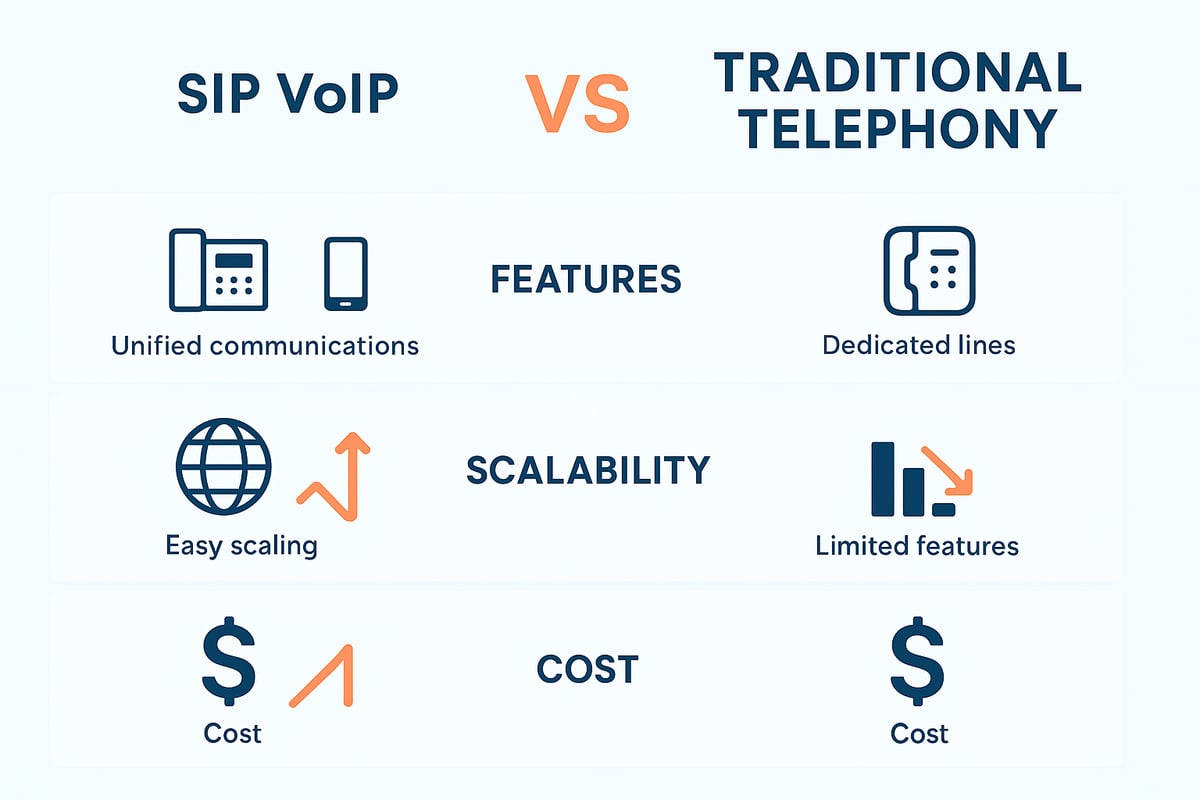
Let us begin by comparing sip voip with traditional telephony in a simple table:
| Aspect | Traditional Telephony | SIP VoIP |
|---|---|---|
| Infrastructure | Dedicated copper lines | Internet-based, virtual channels |
| Features | Basic voice calls | Voice, video, messaging, sharing |
| Scalability | Limited, hardware-dependent | Instantly add/remove users |
| Maintenance | High, on-site support | Remote updates, minimal hardware |
| Cost | Line rental, maintenance fees | Pay per channel or user |
Traditional phone systems rely on physical lines and centralized PBX hardware. This means limited flexibility and higher maintenance requirements. In contrast, sip voip leverages the internet, removing the need for dedicated lines and enabling unified communications.
Switching to sip voip allows companies to scale rapidly without the burden of complex installations or costly service calls.
Enhanced Communication Capabilities
SIP VoIP delivers a unified communications experience that far surpasses traditional telephony. Voice, video, chat, and file sharing are integrated into one platform, accessible from any device.
Teams can connect from anywhere, making sip voip an ideal choice for remote and hybrid workforces. Mobility is built in, so employees can take calls or join conferences from their desk, mobile, or home office.
Integration with business tools is seamless. For example, sales teams using sip voip can instantly return customer calls directly from their CRM, improving response times and customer satisfaction.
Legacy phone lines cannot match this level of flexibility or integration. SIP VoIP empowers businesses to communicate more efficiently, keeping teams and customers connected.
Cost Efficiency and Flexibility
One of the most compelling benefits of sip voip is its cost efficiency. By eliminating expensive hardware and legacy line rentals, businesses can reduce monthly communication costs by 30 to 50 percent.
Pricing models are flexible, with options to pay per user or channel. International and long-distance calls are significantly less expensive. Companies can also add or remove features as their needs change, without investing in new infrastructure.
Many organizations have realized dramatic savings after migrating to sip voip. For instance, a mid-sized company may cut phone bills by 40 percent simply by switching providers. If you are exploring options, reviewing the cheapest SIP trunk providers can help maximize your savings and ensure you choose the right solution for your needs.
With sip voip, you gain the flexibility to expand, adapt, and control expenses, positioning your business for growth and innovation.
Top Benefits of SIP VoIP for Businesses in 2025
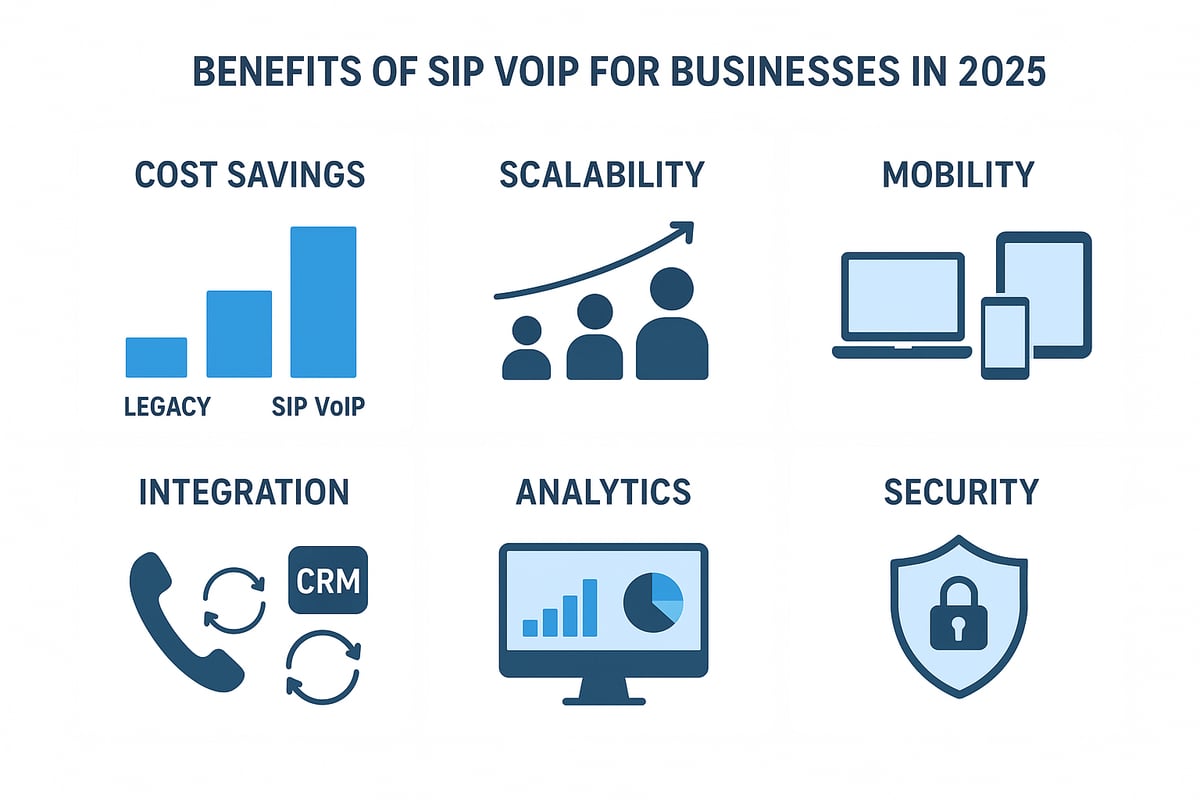
Adopting sip voip is transforming how organizations communicate, collaborate, and grow. The advantages go far beyond simple cost reductions, touching every aspect of business efficiency and agility. As we look toward 2025, these are the top benefits driving widespread sip voip adoption.
1. Substantial Cost Savings
One of the most immediate benefits of sip voip is the dramatic reduction in communication expenses. By eliminating the need for legacy phone hardware and maintenance contracts, organizations can redirect resources to strategic initiatives.
- Lower call rates, especially for international and mobile numbers.
- Consolidation of voice, video, and messaging into a single, predictable bill.
- SMBs are leveraging sip voip trunks to cut monthly bills by up to 50 percent, a figure supported by numerous case studies and industry benchmarks.
- Enterprises can further maximize savings with tailored Enterprise VoIP solutions that scale with business growth.
Transitioning to sip voip means spending less on communications and investing more in business innovation.
2. Unlimited Scalability and Flexibility
Sip voip offers unrivaled scalability, making it easy to adapt as your business grows or changes. Adding users, lines, or features is accomplished instantly through intuitive software portals, not costly hardware upgrades.
- Seasonal businesses can scale up or down without penalty.
- Multi-site and global expansion is possible without new infrastructure.
- Retail chains or service providers can onboard new locations in days, not weeks.
With sip voip, your communications infrastructure grows seamlessly alongside your organization.
3. Enhanced Mobility and Remote Work Support
The rise of remote and hybrid workforces has highlighted the need for flexible, accessible communication tools. Sip voip empowers employees to connect from any device, anywhere, ensuring business continuity and responsiveness.
- Full suite of voice, video, and messaging accessible on desktops, laptops, and mobile devices.
- Supports bring-your-own-device (BYOD) policies for greater flexibility.
- Consistent user experience across office, home, and mobile environments.
Data shows that 85 percent of organizations will adopt cloud-first strategies by 2025, making sip voip essential for supporting modern workstyles.
4. Advanced Integration and Automation
Sip voip streamlines workflows by integrating seamlessly with key business applications. This enables smarter, faster, and more personalized customer interactions.
- Direct integration with CRM, ERP, and helpdesk platforms.
- Features like click-to-call, call logging, and automated call distribution.
- Customer support teams can use integrated analytics to reduce resolution times and improve satisfaction.
Sip voip is the foundation for automated, data-driven communications in the digital age.
5. Powerful Analytics and Reporting
Effective decision-making relies on clear, actionable insights. With sip voip, businesses gain access to powerful analytics and real-time reporting that drive continuous improvement.
- Real-time call data records (CDRs) provide detailed performance monitoring.
- Insights into call volumes, durations, and quality for better staffing and training.
- Data-driven strategies help optimize call routing and reduce customer wait times.
By leveraging sip voip analytics, organizations can identify trends and enhance service delivery.
6. Superior Security and Compliance
Security is paramount in today's communication landscape. Sip voip solutions are built with advanced security features to protect sensitive business data.
- End-to-end encryption and robust authentication protocols.
- Fraud detection and prevention tools to safeguard against unauthorized access.
- Compliance with industry regulations, including GDPR and HIPAA.
Financial firms and healthcare providers rely on sip voip to secure communications and meet stringent compliance standards.
SIP VoIP Market Trends and Outlook for 2025
The sip voip landscape is undergoing rapid transformation as businesses of all sizes embrace digital communications. Market projections, adoption patterns, and technological advances are shaping the industry’s direction for 2025 and beyond.
Explosive Market Growth
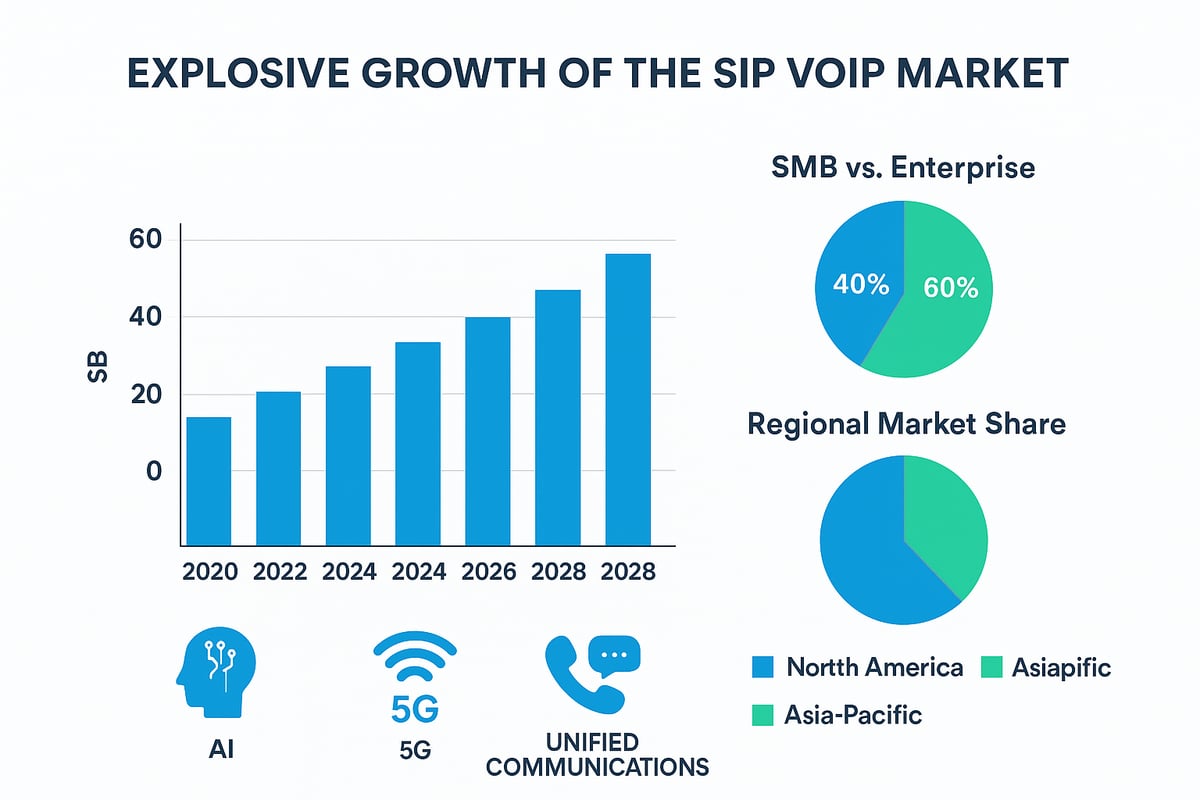
The global sip voip market is expected to surge, with the VoIP services sector projected to reach $236 billion by 2028. SIP trunking alone could climb to $177.84 billion by 2032, driven by double-digit compound annual growth rates near 12-14%.
Several factors are fueling this momentum:
- Widespread digital transformation initiatives
- Growing demand for remote and hybrid work solutions
- Expansion of cloud-based communication platforms
For a deeper dive into market projections, the VoIP Market Size and Forecast offers detailed revenue analysis and regional insights.
Adoption Across Business Sizes and Regions
Sip voip adoption is accelerating across both small and midsize businesses and large enterprises. SMBs are leading the charge due to cost savings and accessibility, while global enterprises leverage unified communications to connect distributed teams.
Regional trends highlight North America as the current leader in sip voip deployment. However, Asia-Pacific is experiencing the fastest growth, fueled by increased mobile and internet adoption. European markets are also expanding as organizations modernize legacy infrastructure.
- SMBs: Fast, affordable deployment
- Enterprises: Global scale, integration
- North America: Largest current market
- Asia-Pacific: Fastest-growing region
Technology Innovations
Innovation is at the core of sip voip evolution. Artificial intelligence is enabling advanced analytics, smarter call routing, and automated transcription. The rollout of 5G networks will deliver higher call quality and lower latency, especially for mobile users.
Security remains a top priority. Next-generation encryption protocols and real-time fraud detection are being built into platforms to address rising cyber threats. Unified communications platforms are also integrating advanced APIs for seamless business tool connections.
Key innovations include:
- AI-powered analytics and automation
- 5G integration for mobile performance
- Enhanced security and compliance features
Future-Proofing Business Communications
Sip voip is central to future-ready business strategies. Unified communications as a service (UCaaS) is rapidly becoming the industry standard, combining voice, video, messaging, and file sharing in one secure platform.
Organizations are prioritizing solutions that offer:
- Seamless integration with productivity tools
- Scalable features for growth or seasonal changes
- Strong security and compliance for sensitive data
Leading enterprises are already leveraging sip voip to deliver omnichannel customer engagement and support remote workforces. By choosing flexible, scalable, and secure solutions, businesses ensure their communications are ready for the future.
Step-by-Step Guide to Implementing SIP VoIP in Your Organization
Modernizing business communications with sip voip is a strategic move that requires careful planning and execution. This step-by-step guide will help you navigate each phase, from initial assessment to ongoing optimization, ensuring a smooth and successful transition.
Assessing Readiness and Requirements
Start by evaluating your current telephony infrastructure and defining your organization's communication needs. A readiness assessment ensures your business is prepared for sip voip migration.
Create a checklist that covers:
- Existing phone systems (analog, digital, or VoIP)
- Network bandwidth and reliability
- Integration points with CRM, ERP, or helpdesk tools
- User locations and remote work policies
Estimate bandwidth needs using the G.711 codec, which typically requires 85 kbps per concurrent call. Identify any gaps in connectivity or hardware that could impact performance. This foundational step sets clear expectations for your sip voip journey.
Selecting the Right SIP VoIP Provider
Choosing a reliable sip voip provider is critical for long-term success. Evaluate providers based on reliability, uptime guarantees, global reach, security features, and responsive support.
Key criteria to consider:
- Network redundancy for uninterrupted service
- Transparent pricing (per user, per channel, or usage-based)
- Support for number porting and local DIDs
- Compliance with industry regulations
Decide between on-premise and cloud-based sip voip solutions. For organizations with multiple locations or remote teams, cloud-based options often offer greater flexibility and scalability. Review case studies of businesses that have successfully transitioned to global providers to guide your decision.
Infrastructure Preparation and Network Optimization
A robust network is essential for sip voip performance. Begin by checking your internet connection speed and consistency. Prioritize Quality of Service (QoS) settings to ensure voice traffic receives the necessary bandwidth.
Upgrade routers, switches, and cabling if required. Configure firewalls to allow sip voip traffic while maintaining security. Collaborate with your IT team or service provider to assess network readiness and address any vulnerabilities.
Regularly monitor network health, especially during peak usage times. This proactive approach prevents call drops, jitter, and latency issues, delivering a reliable user experience for every sip voip call.
System Integration and Configuration
Integrating sip voip with your business systems maximizes value. Set up SIP trunks to connect your PBX (Private Branch Exchange) to the internet. Register endpoints such as IP phones or softphones for user access.
Configure your PBX, whether on-premise, hosted, or hybrid, to route calls through the SIP trunks. For a deeper understanding, refer to this VoIP PBX system explained guide, which breaks down the architecture and setup.
Plan number porting and Direct Inward Dialing (DID) to maintain existing phone numbers. Ensure all endpoints are secure and authenticated before moving to the next phase.
Testing, Training, and Go-Live
Before full deployment, conduct pilot tests to verify call quality, reliability, and feature integration. Test both internal and external calls, including conference and video sessions.
Provide comprehensive training for users on new interfaces and features. Use clear guides, hands-on sessions, and support resources. Roll out sip voip in phases, starting with a pilot group to minimize disruption.
Create a timeline for migration, typically ranging from a few days to several weeks. Monitor feedback closely and address issues quickly to ensure a smooth transition for all staff.
Ongoing Management and Optimization
After go-live, continuous monitoring and optimization are essential for maximizing sip voip benefits. Use real-time analytics to track call quality, usage patterns, and feature adoption across your organization.
Schedule regular security audits and keep all systems updated to defend against evolving threats. Adjust user access, call routing, and features as business needs change. Leverage analytics to refine workflows and reduce operational costs.
Stay engaged with your sip voip provider for updates and support. This commitment to proactive management ensures your communications remain efficient, secure, and ready for future demands.
The Future of SIP VoIP: Innovations and Predictions for 2025
The future of sip voip is rapidly unfolding, promising to redefine how organizations communicate, collaborate, and operate. As digital transformation accelerates, sip voip is set to become the backbone of unified communications, empowering businesses to adapt and thrive amid evolving demands. Emerging innovations in AI, security, 5G, and integration are poised to unlock unprecedented value for enterprises of all sizes.
AI and Automation in SIP VoIP
Artificial intelligence is reshaping sip voip, introducing smarter, more adaptive communication experiences. Predictive analytics harness call data to optimize staffing, anticipate peak demand, and improve customer engagement. AI-driven call routing ensures callers are connected to the right agent quickly, reducing wait times and enhancing satisfaction.
Automation extends to real-time language translation, helping global teams collaborate seamlessly. Advanced transcription services automatically convert calls to text, supporting compliance, training, and accessibility. Sentiment analysis tools can even assess caller moods, providing actionable insights for service improvement.
These AI-powered features elevate sip voip well beyond voice, positioning it as a critical driver of business agility and customer-centric operations.
Enhanced Security and Privacy
Security is at the forefront as sip voip adoption accelerates. Next-generation encryption protocols protect sensitive voice and data transmissions, ensuring privacy and confidentiality. Robust authentication mechanisms and real-time fraud detection systems help safeguard organizations from cyber threats.
Compliance requirements are also evolving. Sip voip platforms increasingly support industry regulations such as GDPR and HIPAA. For example, healthcare providers are leveraging sip voip for HIPAA-compliant telehealth services, enabling secure remote consultations and protecting patient data.
Ongoing investment in security and privacy is essential, as the threat landscape continues to evolve alongside digital communications.
5G and Edge Computing Integration
The rollout of 5G networks is poised to transform sip voip by delivering ultra-low latency, higher bandwidth, and superior call quality. With 5G, mobile VoIP calls and video conferences become crisper and more reliable, supporting real-time collaboration in any location.
Edge computing pushes processing closer to the user, dramatically reducing delays. This is particularly valuable for organizations with distributed or field-based teams, who can now access high-quality video and voice communications even in remote areas. Real-time data processing at the edge enhances responsiveness and opens new possibilities for mission-critical applications.
Together, 5G and edge computing will expand the capabilities and reach of sip voip, making it indispensable for modern enterprises.
Unified Communications and Collaboration
Sip voip is the foundation of unified communications, seamlessly integrating voice, video, messaging, and file sharing into a single, cohesive platform. The rise of Unified Communications as a Service (UCaaS) and API-driven solutions allows organizations to customize workflows and automate processes across departments.
Global teams can collaborate in real time, regardless of location or device. Features like click-to-call, team messaging, and integrated scheduling foster productivity and streamline daily operations. As remote and hybrid work models become standard, sip voip empowers businesses to deliver a consistent, connected experience for employees and clients alike.
Unified communications platforms are quickly becoming the norm, driving the next wave of digital workplace transformation.
Market and Technology Outlook
The sip voip market is on an impressive growth trajectory, fueled by remote work trends and the expansion of cloud-based services. According to SIP Trunking Services Market Growth, the global SIP trunking market is projected to reach unprecedented levels, reflecting rising adoption across industries and regions.
Innovations in AI, security, and connectivity continue to drive demand. New sectors, including education, logistics, and healthcare, are embracing sip voip for its flexibility and cost efficiency. To future-proof communications, organizations should prioritize scalable, secure solutions that can adapt to evolving needs.
By investing strategically in sip voip, businesses can ensure resilience, agility, and competitiveness well into 2025 and beyond.
Frequently Asked Questions About SIP VoIP
Curious about sip voip and how it fits into your business strategy for 2025? Here are the answers to the most common questions from IT leaders and decision-makers.
1. What is the difference between SIP and VoIP?
SIP (Session Initiation Protocol) is a signaling protocol for setting up, managing, and ending multimedia sessions. VoIP (Voice over Internet Protocol) is the technology that transmits voice data over IP networks. In sip voip, SIP handles the call setup, while VoIP delivers the actual voice and data.
2. How much bandwidth does sip voip require per call?
A typical sip voip call using the G.711 codec needs about 85 kbps of bandwidth in each direction. This ensures clear audio quality without overloading your network.
3. Can legacy phone systems integrate with sip voip?
Yes, many legacy PBX systems can connect to sip voip using SIP gateways or adapters. This allows businesses to transition gradually to modern communications without losing existing investments.
4. How secure is sip voip, and what measures protect against fraud?
Sip voip platforms use encryption, authentication, and intrusion detection to safeguard calls. Regular security audits and fraud monitoring are essential for protecting sensitive data.
5. What is the typical implementation timeline for sip voip?
Deployment can be quick. Small businesses may complete migration in a few days, while larger organizations might take several weeks. Planning and testing are key for a smooth transition.
6. How does sip voip support remote and hybrid workforces?
Sip voip enables employees to access full communication features from any device or location. This flexibility is vital as remote and hybrid work models become the norm. According to VoIP Services Market Trends, the adoption of VoIP and SIP solutions is rapidly expanding to support distributed teams.
7. What are the ongoing costs and maintenance requirements?
Ongoing costs for sip voip are typically lower than traditional telephony. Businesses save 30-50% on communications, with maintenance handled via software updates and provider support.
Sip voip continues to evolve, making it a future-proof choice for secure, scalable, and integrated business communications.
As you’ve seen throughout this guide, SIP VoIP is transforming the way businesses communicate - delivering cost savings, flexibility, and the power to connect teams across the globe. Whether you’re looking to streamline workflows, enable seamless remote collaboration, or integrate advanced SMS verification into your systems, it’s never been more important to stay ahead of the curve. Ready to put these insights into action and experience enterprise-grade reliability for yourself? You can take the next step toward modernizing your business communications for 2025 - Start now!
Ready to receive a verification code on a real mobile number?
Browse services