Sinch VoIP Guide: Everything You Need to Know in 2025
Discover the complete Sinch VoIP guide for 2025 Explore features benefits setup integration security and future trends to optimize your business communicatio
Iacopo Bonandi, Founder & CEO
November 9, 2025In 2025, businesses are seeking smarter ways to connect teams and customers across the globe. Sinch VoIP is at the forefront, transforming how enterprises communicate by delivering a reliable, scalable, and feature-rich voice solution.
This guide dives deep into sinch voip, outlining essential features, standout benefits, and practical setup steps for both enterprises and developers. Whether you are exploring advanced integrations or prioritizing security and compliance, you will find actionable strategies tailored to modern demands.
As organizations shift toward digital-first operations, the demand for robust VoIP platforms continues to rise. Sinch VoIP stands out as a leading provider, offering enhanced connectivity, cost savings, and global reach.
Ready to future-proof your communications? Explore the full guide for expert insights, real-world use cases, and step-by-step implementation advice.
What is Sinch VoIP?
Sinch has rapidly become a global leader in cloud communications, with a focus on delivering enterprise-grade VoIP solutions. Founded in Sweden, Sinch grew through strategic acquisitions and investments in advanced voice technologies. By 2025, Sinch boasts a significant market presence across North America, APAC, and EMEA, outpacing many traditional competitors. For enterprises seeking a modern communications stack, Sinch VoIP stands alongside industry giants like Twilio and Vonage, but distinguishes itself through robust APIs and a strong international footprint. To see how Sinch compares to other major business phone services, view this Best VoIP business phone service overview.
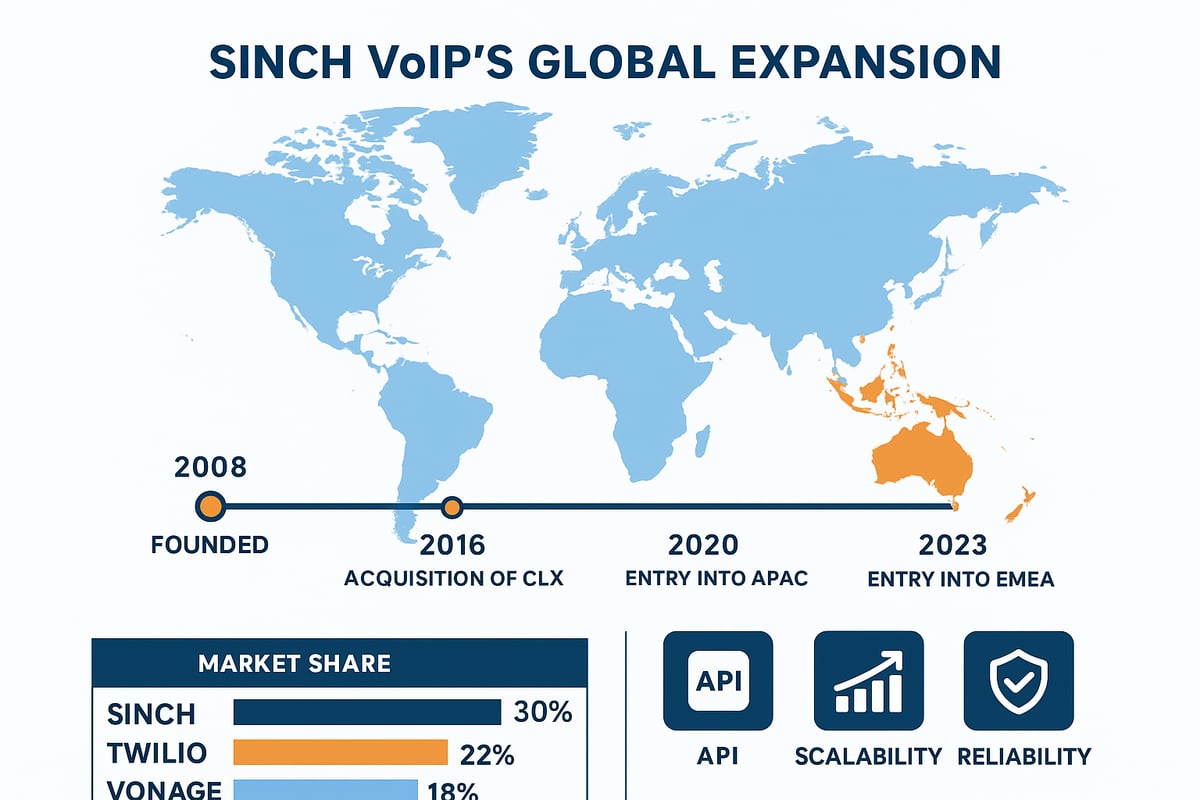
Overview & History of Sinch
Sinch VoIP is engineered to deliver seamless voice calling over IP networks, catering to both large enterprises and agile startups. Its platform offers full support for PSTN and SIP trunking, ensuring compatibility with global telecommunications infrastructure. Developers gain access to API-driven voice features, making it easy to embed real-time calling, call analytics, and reporting into existing workflows. For example, customer support call centers rely on Sinch VoIP for robust, high-quality voice communications and real-time performance monitoring.
- Voice over IP calls with global reach
- PSTN and SIP trunking support
- Real-time analytics and reporting
Sinch VoIP empowers organizations to build scalable, responsive voice solutions.
Core VoIP Capabilities
The main advantage of Sinch VoIP over traditional telephony lies in its cost efficiency and flexibility. Businesses reduce infrastructure expenses by migrating from legacy PBX systems to cloud-based voice solutions. Sinch VoIP easily adapts to remote and hybrid teams, providing unified communications and integration with digital platforms. Modern enterprises benefit from the ability to scale instantly and manage communications centrally. In fact, VoIP adoption rates in enterprises continue to climb, reflecting the growing preference for solutions like Sinch VoIP.
| Feature | Sinch VoIP | Traditional Telephony |
|---|---|---|
| Cost Efficiency | High | Low |
| Scalability | Elastic | Rigid |
| Integration | Extensive | Limited |
Sinch VoIP is a catalyst for digital transformation in business telephony.
Sinch VoIP vs. Traditional Telephony
Sinch VoIP is trusted by organizations in diverse industries, including e-commerce, fintech, healthcare, and logistics. Its omnichannel capabilities enable seamless customer service experiences, while secure voice verification supports user authentication in regulated sectors. For instance, telemedicine platforms leverage Sinch VoIP to connect patients and providers securely and reliably. Industry-specific compliance features make it suitable for healthcare and finance, where privacy and data protection are paramount.
Key use cases for Sinch VoIP:
- Omnichannel customer support
- Secure user authentication
- Telemedicine and remote care
- Logistics and delivery coordination
Sinch VoIP adapts to meet evolving compliance requirements across global markets.
Key Use Cases & Industries
Key Features and Benefits of Sinch VoIP
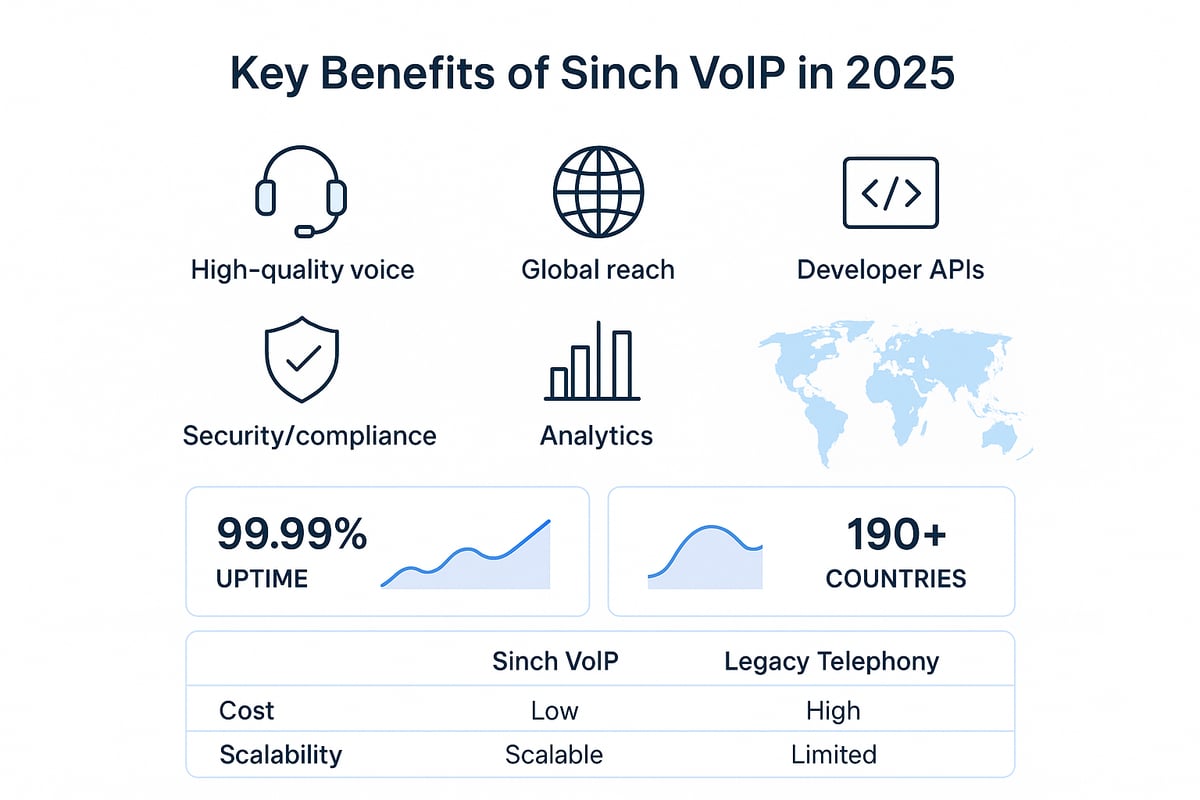
Sinch VoIP stands out in 2025 by offering a robust blend of reliability, scalability, and advanced functionality tailored for modern enterprises. Understanding the features and benefits of sinch voip is crucial for any business aiming to optimize communication infrastructure, reduce costs, and future-proof their operations.
High-Quality Voice & Reliability
Sinch voip leverages HD voice codecs and a global, carrier-grade infrastructure to deliver crystal-clear calls for every business scenario. This infrastructure is designed for maximum uptime, supported by robust redundancy and failover mechanisms. Enterprises benefit from a 99.99% uptime SLA, ensuring mission-critical communications remain uninterrupted.
Real-time call quality monitoring tools allow IT teams to detect and resolve issues proactively. For example, customer support call centers using sinch voip can rely on consistent audio quality, even during peak traffic, reducing dropped calls and improving customer satisfaction.
Global Coverage & Scalability
With sinch voip, businesses can instantly access voice services in over 190 countries, making it ideal for organizations with a global footprint. The platform provides both local and toll-free numbers, allowing companies to establish a presence in new markets without physical offices. Elastic scaling ensures that enterprises can handle seasonal spikes or campaign surges effortlessly.
For those evaluating enterprise-level needs, the Enterprise VoIP solutions overview offers additional insights into how sinch voip meets the demands of global operations. International customer support teams, for instance, can rapidly expand their reach and provide localized service without complex infrastructure investments.
Advanced Developer Tools & APIs
Sinch voip empowers developers with a comprehensive RESTful API suite, making integration with existing business systems seamless. SDKs are available for popular programming languages and platforms, accelerating development cycles and reducing time-to-market. WebRTC support enables browser-based calling, creating smooth omnichannel experiences for end users.
Embedding voice features into mobile apps or web portals is straightforward with sinch voip, allowing businesses to create custom solutions tailored to their unique workflows. This flexibility is especially valuable for organizations seeking to differentiate their customer experience through technology.
Security & Compliance
Security is a cornerstone of sinch voip, with end-to-end encryption safeguarding every call. The platform adheres to global regulations like GDPR and HIPAA, addressing the strict compliance needs of industries such as healthcare and finance. Role-based access controls and detailed audit trails help organizations manage permissions and monitor activity.
For example, financial services firms using sinch voip can ensure secure communications while meeting industry mandates. Built-in compliance features streamline audits and reduce the risk of data breaches, giving enterprises peace of mind.
Cost Optimization & Analytics
Sinch voip offers transparent pricing models that help businesses control telecom expenses. Real-time usage dashboards provide visibility into call volumes, durations, and costs, supporting proactive budget management. Predictive analytics tools analyze call traffic patterns, allowing organizations to optimize routing and reduce unnecessary spending.
A company adopting sinch voip has reported telecom savings of up to 30 percent by leveraging these analytics. The ability to monitor performance and adjust configurations on the fly ensures ongoing efficiency and cost-effectiveness.
Setting Up Sinch VoIP: Step-by-Step Guide
Getting started with sinch voip is straightforward, but following a structured process ensures a seamless launch and maximum benefits. Here’s an actionable, step-by-step guide to setting up sinch voip for your business or development project.
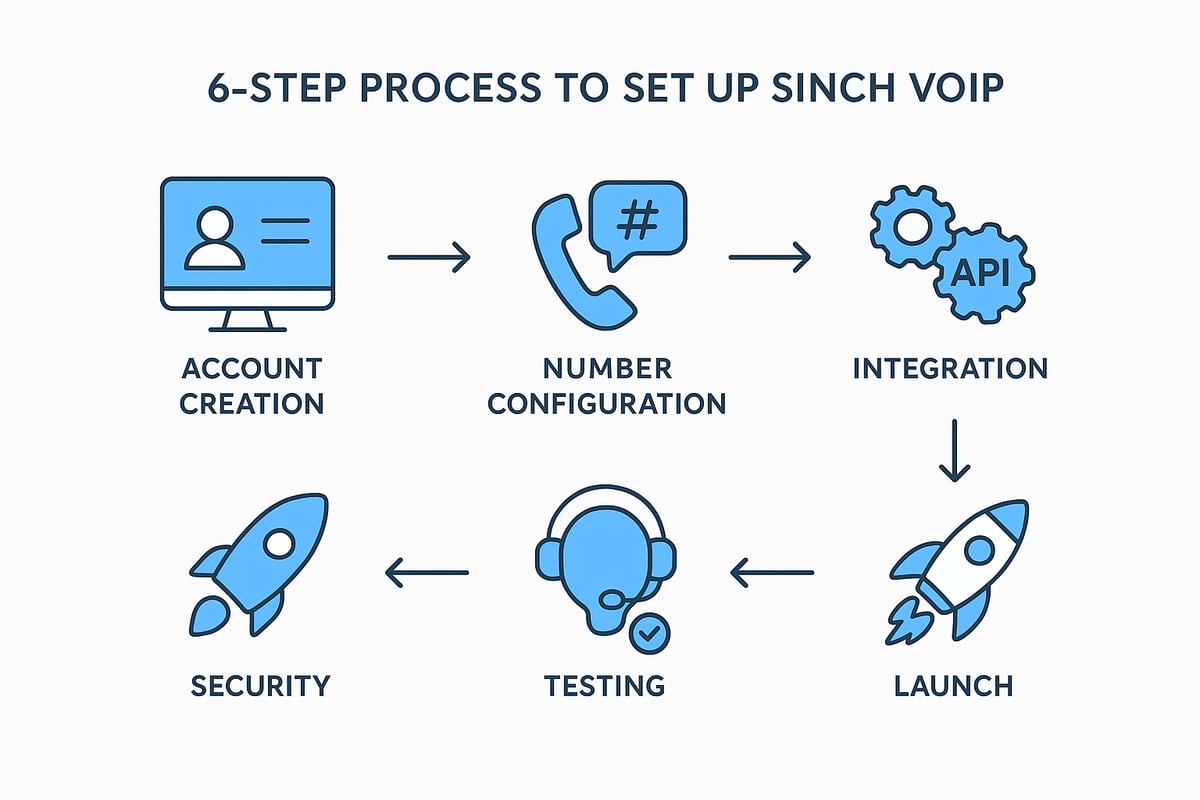
Step 1: Account Creation & Initial Setup
Begin by registering for a sinch voip account on the official platform. Choose the plan that fits your needs, whether you are a small business, large enterprise, or developer looking for sandbox access.
The onboarding process will guide you through account verification and initial setup. You’ll receive instructions via email to confirm your identity and activate your dashboard. Make sure to review available features and select add-ons relevant to your business model.
Here’s a quick checklist:
- Register with business or developer email
- Select appropriate usage plan
- Complete verification steps
- Access your sinch voip dashboard
Starting with the right plan ensures scalability as your communications grow.
Step 2: Configuring Numbers & Routing
Once your account is active, the next step in sinch voip deployment is number configuration. You can acquire local, toll-free, or international numbers directly from the platform.
Porting existing business numbers is also supported, allowing you to maintain brand consistency. Set up call routing rules to direct calls based on business hours or department needs. Interactive Voice Response (IVR) flows can be created to automate call handling.
Table: Number Setup Options
| Option | Feature |
|---|---|
| Local Numbers | Regional presence |
| Toll-Free Numbers | Customer-friendly access |
| Number Porting | Retain existing numbers |
| IVR Flows | Automated call routing |
Configuring numbers and routing in sinch voip ensures all incoming calls reach the right destination efficiently.
Step 3: Integrating with Existing Systems
Integration is a core strength of sinch voip. Connect your voice capabilities with CRM platforms like Salesforce, helpdesk tools such as Zendesk, or ERP systems for unified workflows.
Using RESTful APIs, you can embed calling, call logging, and analytics features into your business applications. SDKs are available for multiple programming languages, making it easy to tailor solutions for your environment.
Examples of integrations include:
- Click-to-call in Salesforce
- Automated ticket creation from calls in Zendesk
- Real-time call data sync to ERPs
Following API best practices ensures your sinch voip deployment is robust and scalable.
Step 4: Implementing Security Measures
Securing your sinch voip setup is crucial, especially if you operate in regulated industries like healthcare or finance. Enable end-to-end encryption for all calls and set up multi-factor authentication for users.
Assign role-based permissions and conduct regular access audits. Compliance with standards such as GDPR and HIPAA protects sensitive data. For a deeper dive into regulatory requirements, see this guide on HIPAA-compliant VoIP security.
Checklist for security:
- Enable encryption
- Configure user roles and permissions
- Schedule compliance audits
- Ensure data residency requirements are met
With these steps, your sinch voip environment remains secure and compliant.
Step 5: Testing & Quality Assurance
Before going live, thoroughly test your sinch voip configuration. Run internal and external test calls to check call quality, audio clarity, and routing accuracy.
Monitor performance using real-time analytics dashboards. Troubleshoot common issues such as latency or dropped calls by consulting the official documentation and support resources.
Testing steps include:
- Conducting test calls across devices
- Verifying IVR and routing logic
- Monitoring call quality metrics
- Resolving detected issues before launch
A strong focus on quality assurance ensures your sinch voip rollout is smooth for both customers and staff.
Step 6: Launch & Ongoing Optimization
Once testing is complete, launch your sinch voip system to your user base. Monitor system performance and user feedback continuously to identify areas for improvement.
Scale resources up or down based on call volume trends. Adjust configurations as your business evolves, adding new numbers or integrations as needed. Use predictive analytics to optimize call routing and manage costs.
Ongoing optimization steps:
- Gather user feedback
- Review analytics reports regularly
- Adjust resource allocation for peak periods
- Update integrations and features as needed
By following these steps, your sinch voip deployment remains agile, efficient, and ready for future growth.
Integration with Business Applications
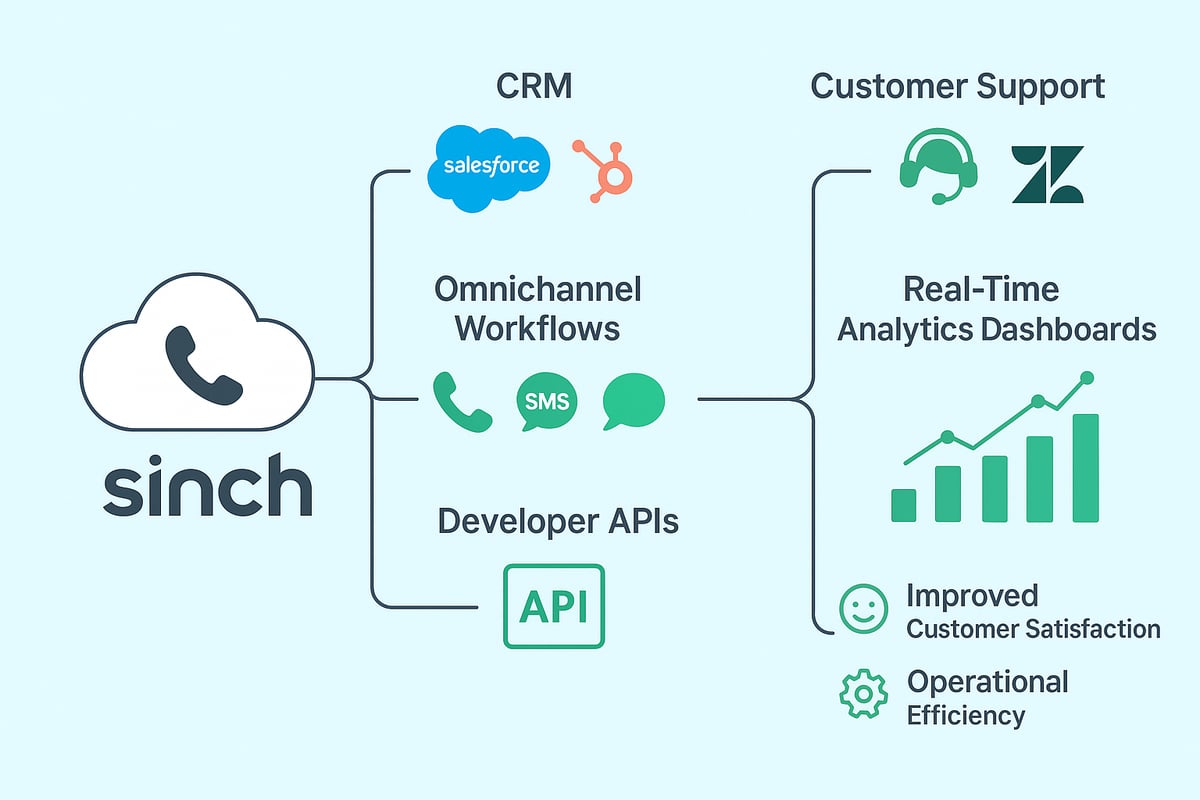
Integrating sinch voip with business applications unlocks new levels of efficiency and customer satisfaction for modern enterprises. From CRM systems to advanced analytics platforms, seamless connectivity ensures every call and interaction is tracked, optimized, and actionable. These integrations empower organizations to deliver consistent, data-driven, and responsive experiences across every channel.
CRM and Customer Support Integration
Sinch voip excels at embedding voice capabilities directly into leading CRM and customer support platforms. By connecting sinch voip to tools like Salesforce, HubSpot, or Zendesk, businesses can enable click-to-call functionality, automatically log calls, and streamline agent workflows. For example, when a customer call comes in via sinch voip, the system can instantly create or update a support ticket, ensuring no details are missed.
Key integration features include:
- Click-to-call from within CRM records
- Automatic logging of call outcomes and notes
- Linking voice recordings to customer profiles
These integrations help teams save time, reduce manual data entry, and provide a holistic view of customer interactions.
Omnichannel Communication Workflows
Modern customer journeys span multiple channels, making omnichannel communication essential. Sinch voip supports unified workflows by combining voice, SMS, and messaging within a single platform. This ensures that every interaction, whether a call or a message, is captured in a unified customer profile.
Teams can seamlessly transition conversations from chat to voice, or vice versa, without losing context. For example, a support chat can escalate to a sinch voip call with a single click, maintaining the entire conversation history. This level of integration improves response times and delivers a consistent customer experience across channels.
Developer-Focused Integration Strategies
For organizations with unique requirements, sinch voip offers robust APIs and SDKs for custom integration. Developers can embed voice features into proprietary apps, trigger workflows via webhooks, and receive real-time notifications for critical events. As artificial intelligence becomes a core part of VoIP, AI integration in VoIP services enables advanced features like automated call routing and sentiment analysis.
Key strategies include:
- Using RESTful APIs to add voice to web or mobile apps
- Leveraging webhooks for instant event-driven actions
- Integrating AI-driven analytics for smarter communications
These tools make it easy for businesses to tailor sinch voip to their specific operational needs.
Real-Time Analytics and Reporting
Sinch voip integrates seamlessly with business intelligence tools such as Tableau and Power BI, providing real-time analytics and reporting. Custom dashboards visualize call volumes, durations, and agent performance, enabling data-driven decision-making.
Organizations can monitor key metrics, identify trends, and optimize workflows based on live data. For example, tracking call response times and resolution rates helps improve customer satisfaction. Sinch voip's analytics empower managers to make informed adjustments and demonstrate measurable business impact.
Security, Compliance, and Reliability in 2025
In 2025, security, compliance, and reliability have become non-negotiable pillars for enterprise communications. As businesses expand globally and regulations tighten, sinch voip stands out by prioritizing robust protection, seamless compliance, and operational resilience. Let’s examine how sinch voip meets these challenges head-on.
Evolving Security Threats & Sinch’s Response
The landscape of VoIP security threats is rapidly evolving in 2025. Businesses face increasing risks from phishing attacks, call spoofing, and sophisticated fraud targeting voice networks. Sinch voip addresses these challenges with layered defense strategies.
Sinch voip employs AI-driven anomaly detection to identify unusual call patterns and block suspicious activity in real time. Automated threat intelligence systems constantly update to defend against emerging exploits. Enterprises benefit from proactive notification systems, helping IT teams respond instantly to incidents. For example, sinch voip can automatically quarantine compromised accounts, safeguarding business communications and customer trust.
Compliance with Global Regulations
Meeting worldwide data protection standards is a core requirement for sinch voip users. Regulations like GDPR, CCPA, and HIPAA have grown more stringent, and new 2025 data residency laws demand careful handling of sensitive information.
Sinch voip ensures data is processed and stored in accordance with regional mandates, offering flexible data residency and secure cross-border transfer options. Multinational enterprises can configure their environments to remain compliant across jurisdictions. For example, a global healthcare provider using sinch voip can confidently manage patient calls and records while meeting both local and international privacy requirements.
Reliability & Business Continuity
For enterprises, uninterrupted service is mission-critical. Sinch voip delivers exceptional reliability through geo-redundant data centers and robust failover protocols. In the event of a local outage, traffic is seamlessly rerouted to backup infrastructure, minimizing disruption.
Key features include a 99.99% uptime SLA and automated disaster recovery. As the Global VoIP market growth projections indicate, dependable communication platforms like sinch voip are fueling enterprise adoption worldwide. Businesses can operate confidently, knowing their communications remain resilient even during unexpected events.
Table: Reliability Features of Sinch VoIP
| Feature | Benefit |
|---|---|
| Geo-redundant centers | Prevents regional downtime |
| Automated failover | Ensures continuous service |
| Disaster recovery | Rapid restoration |
| 99.99% uptime SLA | Enterprise-grade assurance |
Customer Privacy & Data Protection
Protecting customer data is fundamental to sinch voip. All voice communications are encrypted end-to-end, ensuring privacy from call initiation through completion. Sinch voip adopts a privacy-by-design approach, embedding security at every development stage.
Consent management tools help organizations collect, track, and enforce user permissions. For healthcare providers, sinch voip offers granular privacy controls, supporting compliance with strict patient confidentiality laws. Regular audits and transparent data handling policies further reinforce customer trust and regulatory alignment.
Industry-Specific Security Considerations
Different industries have unique security and compliance needs. Sinch voip tailors its solutions for sectors like finance, healthcare, and government, where data breaches can have critical consequences.
For financial services, sinch voip supports PCI DSS compliance and secure voice verification for transactions. Healthcare organizations benefit from HIPAA-ready encryption and access controls. Government agencies leverage advanced authentication and audit trails to safeguard sensitive conversations. By aligning with industry standards, sinch voip empowers organizations to maintain security and compliance without compromise.
Future Trends and Innovations in Sinch VoIP
The landscape of business communication is rapidly evolving, and sinch voip is at the forefront of these changes. Enterprises and developers need to stay ahead by understanding the emerging trends shaping the future of cloud voice solutions. In this section, we explore five key innovation areas that will define sinch voip in the coming years.
AI-Powered Voice Services
Artificial intelligence is revolutionizing sinch voip, unlocking smarter, more responsive voice solutions. Virtual agents now handle customer queries, reducing wait times and improving satisfaction. Automated call routing powered by AI directs calls efficiently, ensuring customers reach the right department every time.
Real-time speech analytics, including sentiment analysis, give businesses deeper insights into customer interactions. This empowers supervisors to coach agents and intervene proactively when needed. For example, AI-driven support desks can detect frustration in a caller’s tone and escalate the case automatically.
With sinch voip, enterprises can deploy machine learning models to personalize conversations and automate repetitive tasks. This leads to faster resolution and a seamless customer journey.
5G and Edge Computing Impact
The rollout of 5G networks and advances in edge computing are transforming sinch voip performance. Ultra-low latency connections mean voice calls are clearer and more immediate, even in high-traffic scenarios. Edge computing brings processing closer to users, reducing delays and improving reliability.
As mobile internet speeds surge, the potential for mobile VoIP grows rapidly. According to recent studies on mobile VoIP market expansion, global usage is expected to skyrocket as smartphone adoption rises.
Sinch voip is well-positioned to support new use cases like IoT device integration, mobile-first customer support, and mission-critical communications for distributed teams.
Unified Communications & Collaboration
Unified communications are central to the sinch voip roadmap. Businesses now demand seamless integration of voice, video, chat, and collaboration tools. Sinch voip enables organizations to unify these channels, making it easy for teams to connect from anywhere.
In remote work environments, employees can switch between calls, video meetings, and instant messaging without disruption. This flexibility boosts productivity and supports hybrid work models.
Trends in UCaaS adoption show enterprises increasingly prefer platforms that consolidate communication tools. Sinch voip delivers on this need, adapting to evolving workplace demands.
Sustainability and Green VoIP
Sustainability is emerging as a major priority for sinch voip users. Cloud-based telephony reduces the need for physical infrastructure, minimizing energy consumption and carbon emissions. Sinch invests in energy-efficient data centers and partners with green-certified providers.
The 2025 sustainability initiatives focus on optimizing hardware utilization and leveraging renewable energy sources. Companies adopting sinch voip can meet their environmental targets while benefiting from scalable communications.
By prioritizing eco-friendly practices, sinch voip becomes a key enabler of corporate sustainability efforts.
Market Forecast and Competitive Landscape
The future of sinch voip is defined by robust growth and increased competition. Market analysts project the global VoIP sector to reach new heights by 2030, driven by enterprise adoption and technological innovation.
Sinch voip maintains a strong position among the top providers, competing with industry leaders by offering advanced features and global reach. Recent statistics highlight rising demand for cloud-based voice, especially in regulated industries and emerging markets.
Investment trends indicate continued funding in AI, security, and integration capabilities. Enterprises evaluating sinch voip should consider both its current strengths and its roadmap for future innovation.
As you’ve seen throughout this guide, Sinch VoIP is setting the standard for business communications in 2025 - delivering outstanding voice quality, global coverage, and advanced integration tools for both developers and enterprises. Whether you’re aiming to streamline customer support, enhance security, or optimize costs, VoIPStore empowers you to connect reliably with partners and customers worldwide. If you’re ready to put these insights into practice and experience seamless communication firsthand, there’s no better time to take the next step.
Start now!
Ready to receive a verification code on a real mobile number?
Browse services