Grandstream Phone System Guide: Setup & Features for 2025
Unlock seamless business communication in 2025 with our Grandstream phone system guide covering setup, features, and expert tips for reliable VoIP performance.
Iacopo Bonandi, Founder & CEO
November 7, 2025Unlock the power of modern business communication with the Grandstream phone system, designed to keep your organization seamlessly connected in 2025. As technology rapidly advances, businesses are seeking reliable solutions that blend innovation, scalability, and cost efficiency.
This comprehensive guide will walk you through everything you need to know about setting up and optimizing a Grandstream phone system. You will discover its robust product range, step-by-step deployment strategies, and standout features.
Whether you are an IT professional or a business leader, this guide will help you leverage Grandstream’s reputation for reliability and advanced capabilities. Ready to transform your communications? Follow along and make your next deployment a success.
Understanding Grandstream Phone Systems
Modern businesses need reliable and flexible communication tools. The grandstream phone system stands out as a top choice for organizations seeking unified, feature-rich telephony. This section breaks down what makes Grandstream unique, from its technology foundation to the latest models and ideal use cases.
What is a Grandstream Phone System?
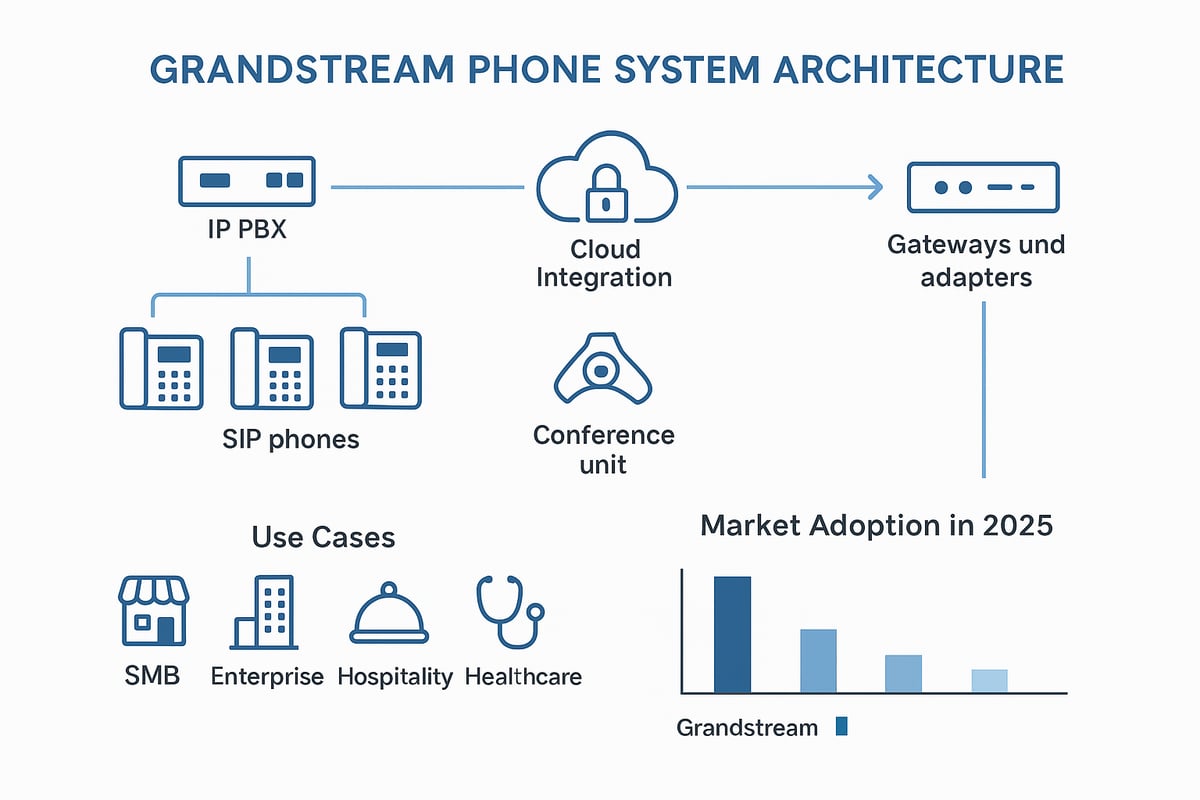
A grandstream phone system is a unified communications solution built on IP PBX, SIP, and VoIP technologies. Grandstream, a global leader in VoIP hardware, offers systems that include desk phones, PBX units, gateways, and analog adapters. These systems connect users over data networks, replacing traditional phone lines with internet-based calls.
Organizations can choose between on-premises and hosted grandstream phone system deployments. Recent innovations include Wi-Fi 6 support, enhanced device management, and mobile integration. Use cases span from small businesses and enterprises to hospitality and healthcare. Leading examples like the Grandstream G400 and GRP series showcase the brand's commitment to modern telephony.
Key Models and Product Range for 2025
The grandstream phone system lineup for 2025 includes a variety of IP phones, both corded and cordless, as well as conference phones for collaborative spaces. Popular models such as the GRP2615, GRP2670, and the WP wireless series offer advanced features like color screens, HD audio, and Wi-Fi connectivity.
Wireless expansion is easy with DECT base stations and repeaters. Accessories such as wall mounts, headsets, and power supplies help tailor the system to business needs. Grandstream phones are compatible with major third-party devices, ensuring flexibility. Pricing tiers range from entry-level to professional, supporting scalability for growing organizations.
Why Choose Grandstream?
Businesses select the grandstream phone system for its cost-effectiveness and robust feature set. Compared to other brands, Grandstream delivers advanced capabilities at competitive prices. Deployment and management are straightforward, making it attractive for IT teams with limited resources.
Security and reliability are central, with features like encrypted calls and regular firmware updates. Grandstream's global support network and active community ensure help is always available. Industry surveys consistently rate customer satisfaction highly, reflecting the brand's reputation for quality and innovation.
Grandstream in the VoIP Ecosystem
The grandstream phone system is designed for seamless interoperability with leading VoIP providers and PBX platforms. Grandstream products adhere to SIP compliance and open standards, supporting integration with business software such as CRM and UCaaS tools.
These systems excel in both cloud and hybrid environments. According to recent statistics, Grandstream's market share continues to grow as more businesses adopt IP-based telephony. For a deeper look at the product range and integration options, see the Grandstream VoIP phones overview.
Who Should Use Grandstream Phone Systems?
A grandstream phone system is ideal for small and medium businesses, large enterprises, and remote teams. It offers flexible and scalable communication for organizations with multiple locations or global operations.
IT departments appreciate the easy management and straightforward expansion options. Industries such as hospitality, healthcare, and professional services benefit from tailored features and reliable performance. Grandstream empowers businesses to stay connected, productive, and ready for future growth.
Step-by-Step Grandstream Phone System Setup
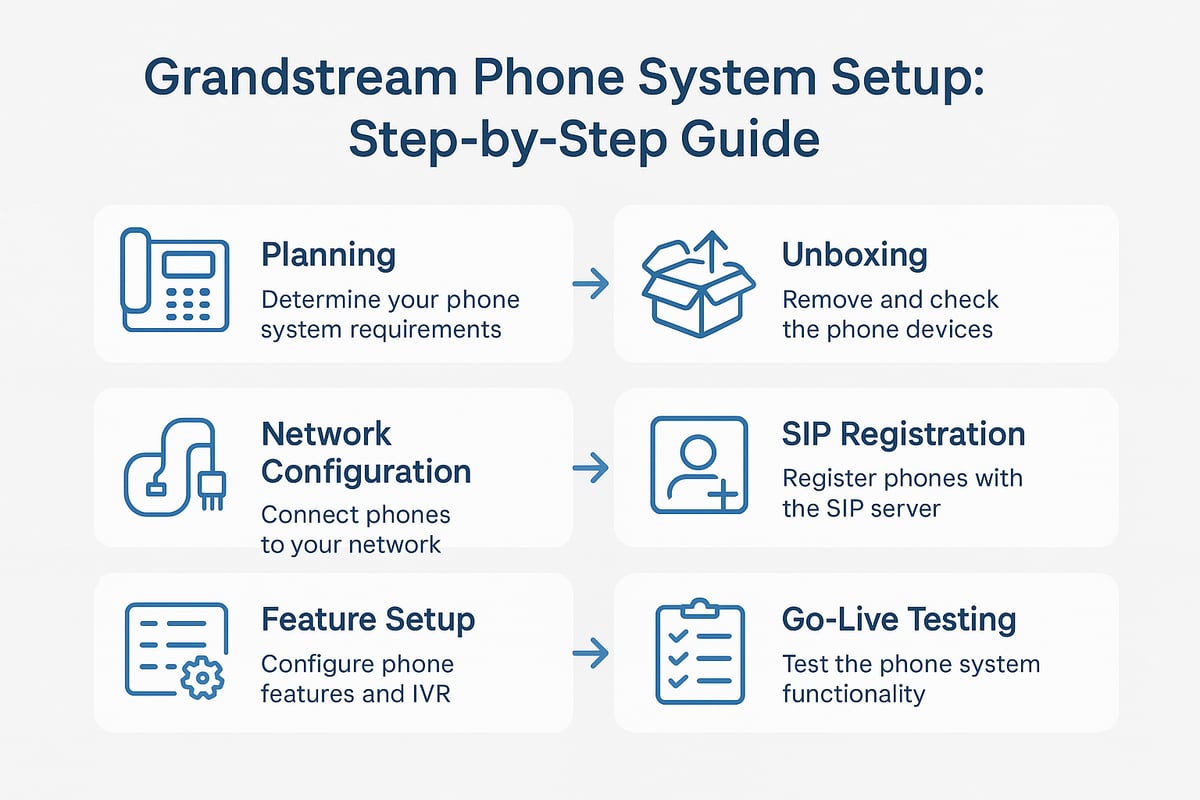
Setting up a grandstream phone system for your business requires a structured approach. Following a clear deployment process ensures optimal performance, security, and scalability from day one. Here’s a comprehensive guide to getting your grandstream phone system operational, whether you’re deploying for a small team or a large enterprise.
Planning Your Grandstream Deployment
Start by analyzing your organization’s communication requirements. Consider the expected call volume, number of users, and whether you need features like video calls or mobile integration. Decide if your grandstream phone system will be on-premises or hosted in the cloud.
Select compatible phone models, such as desk phones or cordless units, based on user roles. Factor in accessories like headsets or wall mounts. Check your network infrastructure for PoE switches, routers, and reliable internet. Allocate a budget that covers initial setup and future expansion.
For example, a 20-user office might combine GRP series desk phones with a UCM IP PBX and DECT base stations for wireless coverage. Document these decisions for a smooth grandstream phone system rollout.
Unboxing and Hardware Installation
Once your grandstream phone system equipment arrives, verify all items against the packing list. Typical components include IP phones, PBX hardware, power supplies, Ethernet cables, and mounts.
Set up desk phones at each workstation and wall-mount units where necessary. Conference phones should be placed centrally in meeting rooms. Connect devices to the network via Ethernet or, for wireless models, configure Wi-Fi or DECT connections.
For power, choose between PoE (using network switches) or individual adapters. Place DECT base stations for optimal wireless range. If you need a visual guide for the process, the Grandstream GXP1625 Setup Guide offers a helpful walkthrough of basic installation steps.
Initial Configuration and Network Setup
Access the grandstream phone system’s web interface using a browser. Assign IP addresses to each device, opting for DHCP for simplicity or static addresses for advanced network control.
Update firmware to ensure the latest security patches and features. Configure VLANs for voice traffic and apply QoS settings to prioritize call quality. This reduces latency and jitter, especially in busy office environments.
Troubleshoot network issues by checking cable connections, switch port settings, and confirming device registration. Proper initial configuration is essential for a reliable grandstream phone system.
Registering SIP Accounts and Extensions
Next, connect your grandstream phone system to a VoIP provider by registering SIP trunks. Use the PBX’s interface to add user extensions and create groups for departments or teams.
Define outbound and inbound call rules to manage dialing patterns and number routing. For example, registering with providers like 8x8 or RingCentral is straightforward: enter SIP credentials supplied by your vendor.
Strengthen security by using strong, unique passwords for each SIP account. Regularly audit credentials to prevent unauthorized access to your grandstream phone system.
Advanced Feature Configuration
Maximize the grandstream phone system’s capabilities by setting up advanced features. Configure IVR or auto-attendant menus to direct callers efficiently. Design call flows with ring groups and call queues tailored to your business.
Set up voicemail for each extension, enabling notifications via email or app. Activate call recording and monitoring features for quality assurance or compliance needs. For example, a support team can customize IVR prompts to streamline customer inquiries.
Document these configurations for easy reference and future adjustments. This step unlocks the full potential of your grandstream phone system.
Testing and Go-Live Checklist
Before going live, run comprehensive tests on your grandstream phone system. Make internal and external calls to confirm connectivity and call quality. Check that all devices register correctly and that features like voicemail, IVR, and call routing work as intended.
Train staff on using the phones and accessing advanced features. Complete a final security review, ensuring all firmware is up to date and access controls are enforced.
Maintain documentation and know where to access support resources. This ensures your grandstream phone system operates smoothly from day one.
Essential Features of Grandstream Phone Systems
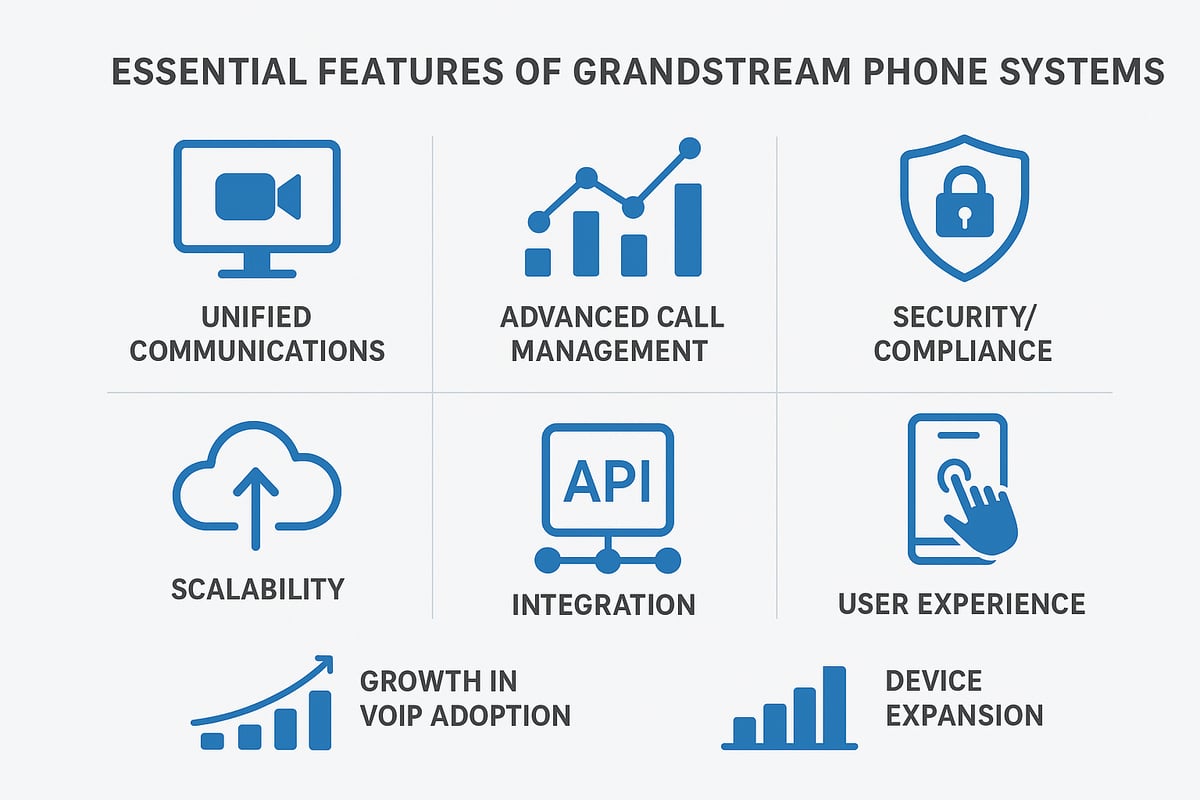
Modern organizations demand more than just basic calls. The grandstream phone system delivers a rich suite of features designed to meet the needs of today’s fast-paced business environments. Let’s explore the essential capabilities that make these systems stand out for 2025.
Unified Communications and Collaboration
The grandstream phone system is built for unified communications, allowing seamless integration of voice, video, and messaging. Employees can collaborate from any location using mobile and desktop softphone apps like Grandstream Wave.
Presence indicators show real-time availability, making it easier to connect with colleagues. Hybrid teams benefit from built-in video conferencing and instant messaging, enabling effortless communication across devices.
For example, remote workers can join meetings or answer calls on the go using the Wave app. This flexibility ensures that your team stays connected and productive, no matter where they are.
Advanced Call Management
With a grandstream phone system, advanced call management becomes intuitive and efficient. Multi-line support allows users to handle multiple calls simultaneously, while features like call transfer, forwarding, and parking streamline daily workflows.
Customizable call flows let businesses set up schedules and routing rules based on business hours or departments. Call analytics provide actionable insights into call volumes and response times, helping managers optimize performance.
If your organization handles high call volumes, such as in a call center, ring groups and call queues ensure that customers reach the right agent without delays.
Security and Compliance
Security remains a top priority for any grandstream phone system. Robust encryption protocols, including SRTP and TLS, protect conversations from interception. User authentication and granular access controls minimize unauthorized access risks.
Compliance features like call recording management help organizations meet industry regulations, such as HIPAA or GDPR. Regular firmware updates are simple to deploy, reducing vulnerabilities and maintaining system integrity.
Recent statistics indicate that businesses with secure VoIP solutions experience fewer security incidents. Grandstream’s commitment to security safeguards your communications and your reputation.
Scalability and Flexibility
A grandstream phone system grows with your business. Adding new users or devices is straightforward, whether you’re expanding in one office or across multiple sites. Support for DECT and Wi-Fi phones enables wireless expansion without extra cabling.
Remote workers and branch offices can be integrated into the same communication system, maintaining consistency and control. For example, scaling from 10 to 100 users is achievable with minimal disruption and predictable costs.
This flexibility ensures your investment remains valuable as your organization evolves and adapts to new challenges.
Integration Capabilities
Integration is a hallmark of the grandstream phone system. Native compatibility with leading CRM and helpdesk platforms, such as Salesforce and Zendesk, streamlines customer interactions and automates workflows.
API access allows for custom integrations with paging, surveillance, and access control systems. Businesses operating in warehouses can connect their phone system to overhead paging seamlessly.
For more on device interoperability and third-party compatibility, see the VoIP phone compatibility guide. This ensures your communications ecosystem is robust and future-ready.
User Experience and Accessibility
The grandstream phone system emphasizes a user-friendly experience with intuitive interfaces and customizable options. Touchscreen models, such as the GRP2670, offer clear navigation and programmable buttons for quick access to key features.
Accessibility options support users with disabilities, including large fonts, tactile keys, and multilingual menus. These thoughtful enhancements make the system usable for everyone on your team.
By prioritizing usability, Grandstream ensures that every employee can communicate effectively, regardless of their role or technical expertise.
Comparing Grandstream with Other VoIP Phone Systems
Making the right choice in a business phone solution is critical. The grandstream phone system often stands out, but how does it compare to other leading VoIP brands? Let us break down the differences, strengths, limitations, and future-proofing factors so you can make an informed decision.

Grandstream vs. Other Leading Brands
When comparing the grandstream phone system to competitors like Yealink, Poly, and Cisco, several distinctions emerge. Grandstream offers advanced features at a competitive price point, making it an attractive option for businesses of all sizes.
| Feature | Grandstream | Yealink | Poly | Cisco |
|---|---|---|---|---|
| Price Range | $$ | $$ | $$$ | $$$$ |
| Feature Set | Advanced, Unified | Advanced | Robust | Enterprise-grade |
| Warranty | 1-2 years | 1-2 years | 1-3 years | 1-3 years |
| Market Perception | Reliable, Innovative | User-friendly | Durable | Premium |
For a deeper dive into how these systems stack up, see this helpful resource on Comparing VoIP phone systems.
For example, the Grandstream GRP2615 is often compared to Yealink’s T46U, with both offering color displays and multi-line support. However, Grandstream’s device management options and integration flexibility are often cited as key differentiators.
Strengths and Limitations
The grandstream phone system is known for several unique strengths:
- Open standards and SIP compliance support wide interoperability.
- Ease of deployment and intuitive management benefit IT teams.
- Strong community and documentation make troubleshooting easier.
However, potential limitations include:
- A steeper learning curve for advanced features.
- Some users report that support resources, while robust, can be less comprehensive than those from larger enterprise vendors.
Feedback from IT professionals highlights the grandstream phone system as reliable and cost-effective, especially for growing businesses.
Use Case Scenarios
The grandstream phone system adapts well to a variety of industries and environments:
- Small business offices needing affordable, scalable communication.
- Enterprise rollouts with multi-site or global requirements.
- Hospitality and healthcare settings that require secure, flexible solutions.
- Remote and hybrid teams relying on unified communications.
For instance, a hotel chain can deploy the grandstream phone system across multiple locations, ensuring consistent guest service and centralized management.
Future-Proofing Your Investment
Choosing a grandstream phone system means planning for long-term success. Grandstream provides regular firmware and software updates, ensuring ongoing security and feature enhancements.
The system supports emerging technologies like Wi-Fi 6 and 5G, with upgrade paths available across the product line. The typical lifespan of VoIP hardware is five to seven years, and Grandstream’s commitment to open standards helps maximize your investment.
Statistics show that organizations using a grandstream phone system experience lower total cost of ownership and easier upgrade cycles compared to proprietary solutions.
Optimizing and Maintaining Your Grandstream System
A well-optimized grandstream phone system is essential for achieving reliable business communications. Ongoing maintenance keeps your network resilient, secure, and ready for growth. In this section, learn strategies for performance, security, user training, and future-proofing to ensure your system delivers value year after year.
Best Practices for Performance and Reliability
Maintaining peak performance for your grandstream phone system starts with proactive measures. Regularly update firmware on all devices to access new features and security patches. Monitor call quality and system health using built-in analytics or third-party tools. Optimize your network by configuring Quality of Service (QoS) and VLANs to prioritize voice traffic, minimizing latency and jitter. Schedule routine backups to protect configurations and voicemails, ensuring quick recovery in case of an outage. For streamlined management, leverage centralized tools like the Grandstream Device Management System, which simplifies provisioning and monitoring across multiple locations or devices.
Security Hardening and Compliance
Safeguarding your grandstream phone system from threats is crucial. Enable encryption protocols such as SRTP and TLS on all endpoints to secure call data. Enforce strong password policies and manage user access with defined roles. Conduct regular security audits to identify vulnerabilities and ensure compliance with standards like HIPAA or GDPR. For remote and hybrid work environments, implement secure VPN connections and restrict remote access to authorized users only. Staying vigilant with security practices not only protects sensitive information but also builds customer trust in your communication infrastructure.
Training and Support Resources
Ensuring your team can confidently use and troubleshoot the grandstream phone system reduces downtime and boosts productivity. Start with comprehensive staff onboarding sessions and provide clear user manuals tailored to your deployment. Make use of Grandstream’s knowledge base and active user forums for on-demand solutions to common issues. For more complex challenges, reach out to vendor or reseller support, and consider community-driven troubleshooting for unique scenarios. Incorporate video tutorials and hands-on training to keep users updated on new features or system changes.
Planning for Growth and Upgrades
A future-ready grandstream phone system should adapt as your business evolves. Plan for expansion by adding new users, devices, or integrating advanced features as your needs grow. When considering hardware upgrades, look for models that support the latest technologies, such as Wi-Fi 6. For example, Grandstream’s latest Wi-Fi 6 IP phones offer faster wireless connectivity and improved network efficiency. Evaluate options for cloud or hybrid deployments to support remote teams. Budget for periodic upgrades and review your system’s roadmap to ensure you stay ahead of technology trends.
Frequently Asked Questions About Grandstream Phone Systems
Whether you are deploying your first grandstream phone system or optimizing an existing setup, questions are inevitable. This FAQ section addresses the most common topics to help you keep your system running smoothly and prepare for future needs.
General Usage and Troubleshooting
Getting started with a grandstream phone system can raise practical concerns. Common setup issues include network misconfiguration, incorrect SIP credentials, or outdated firmware. If a device fails to register, double-check server details and credentials.
To reset a device, use the physical reset button or access the web interface for a factory reset. Recovering forgotten passwords typically involves a reset process, so ensure device backups are up to date.
When facing call quality problems, check your network for bandwidth issues or QoS misconfigurations. Regularly update firmware to maintain security and performance. For example, if extensions are not registering, verify that the SIP server is accessible and not blocked by a firewall.
Licensing, Compatibility, and Support
Understanding licensing for your grandstream phone system is essential. Most devices operate on a per-device basis, with no recurring software license fees for standard features. Compatibility with major SIP providers is broad, so you can choose the best service for your needs.
If you are evaluating VoIP solutions, consider reading about the Best VoIP business phone service to compare your options. Grandstream supports integration with many third-party PBX platforms, making it flexible for existing infrastructure.
Support is available through Grandstream’s global network of resellers, as well as warranty terms typically ranging from one to three years.
Feature-Specific Questions
The grandstream phone system offers robust features such as voicemail, interactive voice response (IVR), and mobile apps. Setting up voicemail is straightforward via the user portal or device menu.
To configure IVR, use the PBX web interface to set up call flows and menu options. Remote access is possible through mobile apps, allowing users to stay connected outside the office. Enabling call recording and analytics is managed through the PBX settings.
For call forwarding, set rules directly on the phone or within the PBX to route calls based on schedules or caller ID. These features are designed to enhance productivity and streamline communication.
Upgrades and Future Trends
Knowing when to upgrade your grandstream phone system depends on hardware age, feature needs, and compatibility with new technologies. Adopting the latest models, like the Grandstream GRP2650 Overview, ensures you benefit from the newest advancements in VoIP.
Trends for 2025 include support for Wi-Fi 6, improved security protocols, and tighter integration with unified communications platforms. Preparing for these trends involves regular firmware updates and evaluating new hardware when expanding your system.
By staying current, your organization will maximize reliability and future-proof its communication infrastructure.
As you explore Grandstream’s capabilities and discover how a modern phone system can transform communication for your business in 2025, remember that the real advantage comes from putting these insights into action. With VoIPStore’s global VoIP solutions and developer-friendly tools, you’re set up for seamless connectivity, enterprise-grade reliability, and rapid growth - no matter where your team is located. Ready to take the next step toward streamlined communications and future proof your setup?
Start now!
Ready to receive a verification code on a real mobile number?
Browse services