The Essential Teams VoIP Pricing Guide for 2025
Discover the ultimate Teams VoIP pricing guide for 2025. Compare providers, pricing structures, and cost optimization strategies to make informed decisions f
Iacopo Bonandi, Founder & CEO
November 18, 2025Integrated communication solutions are more essential than ever as organizations adapt to rapid workplace changes. In 2025, Microsoft Teams VoIP is a cornerstone for remote and hybrid teams, enabling seamless collaboration across locations.
However, many businesses struggle to navigate teams voip pricing, facing confusion due to varying regional costs, feature sets, and provider options. This complexity can make budgeting and decision-making challenging for IT leaders.
This guide is designed to cut through the noise. It offers a clear, comprehensive, and actionable overview of Teams VoIP pricing for 2025. You will find essential details on Teams VoIP fundamentals, pricing structures, influencing factors, provider comparisons, cost optimization strategies, and future market trends.
Understanding Microsoft Teams VoIP: Features and Benefits
Microsoft Teams VoIP has rapidly evolved into a foundational element for unified communications. Its integration within the Microsoft 365 ecosystem allows businesses to leverage a cloud-based phone system without the need for traditional PBX hardware. Teams VoIP replaces legacy phone lines with internet-enabled calling, offering scalability that adapts to growth or shifting work environments. Unlike conventional telephony, Teams VoIP is managed centrally and can be deployed across multiple locations with ease. Adoption rates among enterprises have soared, reflecting the system’s role in modern workplace transformation and the growing focus on teams voip pricing for budgeting.
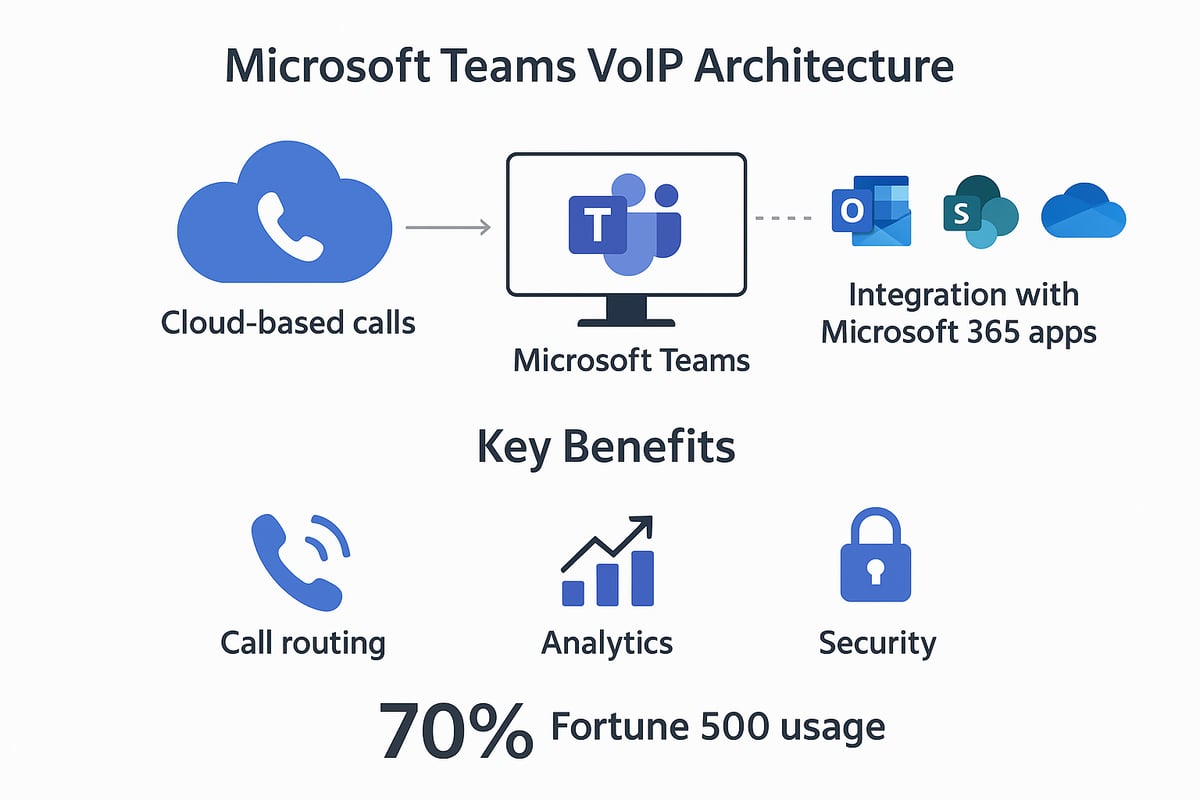
What is Teams VoIP?
Teams VoIP is a modern, cloud-based voice solution embedded within Microsoft Teams. It enables organizations to make and receive calls over the internet, fully integrated with Microsoft 365 tools for seamless communication. Unlike traditional phone systems, Teams VoIP eliminates the need for physical phone lines and on-premises servers. Its cloud architecture supports rapid scaling, enabling businesses to adjust their communications infrastructure as needed. Enterprise adoption has grown significantly, as companies seek flexible, cost-effective alternatives that align with teams voip pricing considerations in global deployments.
Core Features of Teams VoIP
Teams VoIP offers a suite of advanced features designed to streamline business communications. Key functionalities include intelligent call routing, auto-attendant, and integrated voicemail. Organizations can connect to the Public Switched Telephone Network (PSTN) using Direct Routing or Microsoft’s native options. Advanced call analytics and detailed reporting help monitor performance and usage. Security and compliance tools protect sensitive data and support industry regulations. For a deeper look at features and how they influence teams voip pricing, see the Microsoft Teams Phone System Pricing & Plans: Full Guide for 2025. A multinational company, for example, can centralize global calling operations while maintaining local compliance.
Key Benefits for Organizations
Adopting Teams VoIP brings significant organizational benefits. Enhanced collaboration and productivity result from seamless integration with chat, meetings, and file sharing. Teams VoIP pricing usually leads to cost savings compared to legacy PBX systems, especially when factoring in reduced hardware and maintenance. The platform’s global reach enables remote and hybrid workforces, with centralized management simplifying administration. According to Gartner (2024), 70% of Fortune 500 companies now use Teams, underscoring its widespread impact and the importance of understanding teams voip pricing for strategic planning.
Teams VoIP Limitations and Considerations
Despite its strengths, Teams VoIP comes with limitations. Regional availability and regulatory compliance may restrict features in certain countries. The service depends entirely on reliable internet connectivity, posing challenges in areas with unstable networks. Some organizations may encounter feature gaps when compared to specialized VoIP providers, affecting teams voip pricing value calculations. Security best practices must be followed to protect communications, particularly in regulated industries. For example, financial and healthcare firms face additional compliance hurdles that can influence deployment strategies and overall costs.
Teams VoIP Pricing Structures Explained
Understanding teams voip pricing is essential for any organization evaluating Microsoft Teams as a unified communications solution. Pricing models are varied and can be confusing, especially as new options are introduced and regional differences persist. Below, we break down each main pricing structure, highlight examples, and offer practical insights to help you navigate costs in 2025.
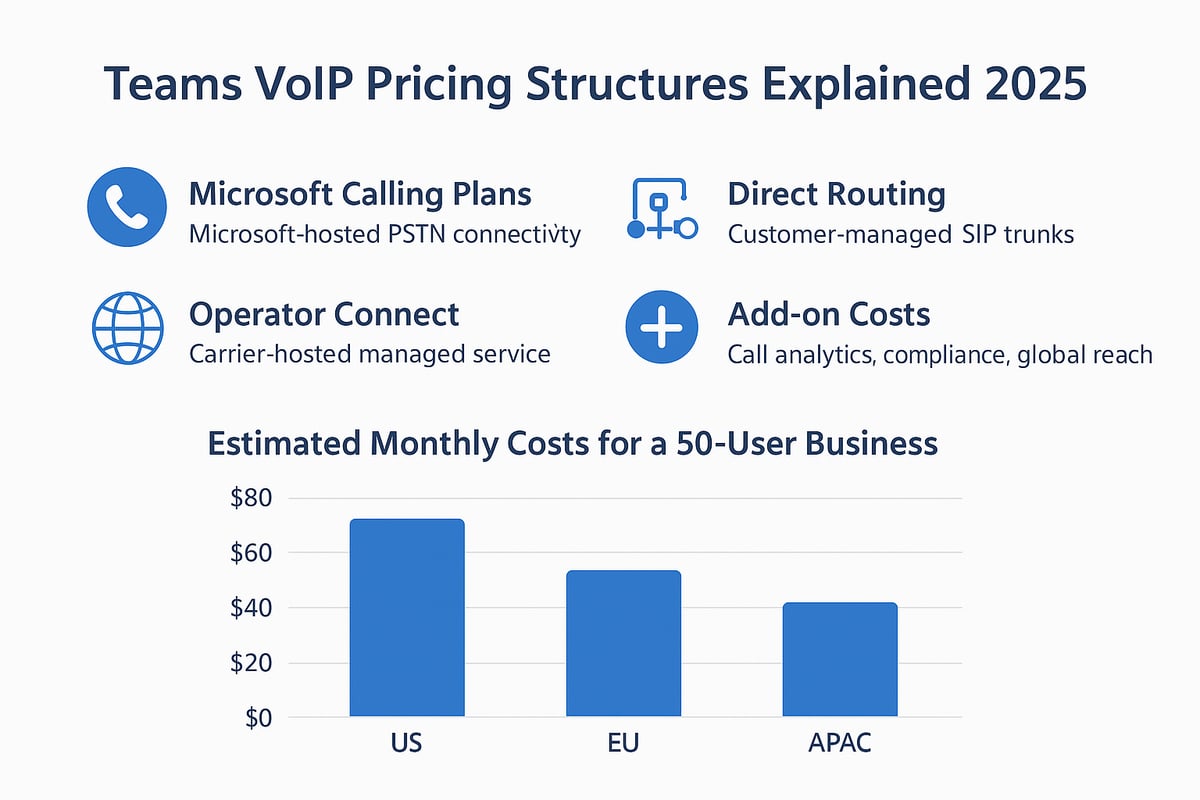
Microsoft Calling Plans
Microsoft offers native Calling Plans as the simplest way to add PSTN calling to Teams. These plans are available in Domestic, International, and Pay-As-You-Go tiers. Each tier includes a set number of minutes, with pricing that varies by region. For example, a Domestic Calling Plan for the US may cost less per user than in the EU, reflecting local telecom rates.
Included features often cover call routing, voicemail, and basic analytics. For a 50-user business, monthly costs can range from $12 to $24 per user, depending on region and plan type. The table below illustrates a sample comparison:
| Plan Type | US Price/User | EU Price/User | Included Minutes |
|---|---|---|---|
| Domestic | $12 | $15 | 3,000 |
| International | $24 | $28 | 3,000 + Intl |
| Pay-As-You-Go | $8 | $10 | Usage Based |
Keep in mind, Microsoft regularly updates these plans. For the latest licensing and pricing changes effective July 2025, see the Licensing and Pricing Updates for Teams Phone and Power BI Coming July 1, 2025. Staying informed about these updates ensures your teams voip pricing strategy remains accurate.
Direct Routing: Costs and Flexibility
Direct Routing lets organizations connect Teams to their preferred telecom carriers using a certified Session Border Controller (SBC). This approach requires up-front investment in SBCs, carrier contracts, and Teams Phone System licenses. Ongoing costs include SBC maintenance and carrier call charges.
While setup may be more complex, Direct Routing offers flexibility to negotiate rates, especially for large enterprises. For example, a multinational with 1,000 users can save 20 to 30 percent on teams voip pricing by leveraging existing carrier contracts and optimizing call paths. This model is ideal for organizations with legacy telephony infrastructure or unique regulatory needs.
Operator Connect: A New Option for 2025
Operator Connect is the latest addition to Teams telephony. It enables direct integration with certified telecom carriers, simplifying provisioning and support. Unlike Direct Routing, Operator Connect does not require managing SBCs, as the carrier handles this infrastructure.
Pricing is typically offered per user or per minute, with some providers bundling services for a flat monthly rate. Operator Connect can accelerate deployment for mid-sized organizations, reducing IT overhead. As more carriers join the program in 2025, expect increased competition and more transparent teams voip pricing options.
Add-On Features and Licensing Costs
Teams VoIP functionality can be expanded with add-ons like Audio Conferencing or Compliance Recording. These features often require additional licenses, which can be priced per user or for the entire organization. Some Microsoft 365 bundles include core telephony features, but advanced capabilities are frequently sold separately.
Per-user add-ons may range from $2 to $8 per month. Organizations must assess whether bundled or standalone licensing provides better value. According to IDC (2024), 40 percent of Teams users purchase at least one add-on, making these extras a significant part of teams voip pricing. Careful planning helps avoid overspending on unnecessary features.
Hidden Fees and Cost Pitfalls
Beyond headline rates, organizations should watch for hidden fees in teams voip pricing. Common pitfalls include number porting charges, international call surcharges, and costs for managing phone numbers. Minimum contract commitments and usage overages can also inflate total expenses.
For example, a global rollout may incur unexpected charges due to regional telecom regulations or currency fluctuations. To avoid surprises, clarify all fees with providers, monitor monthly usage, and negotiate flexible contract terms. Proactive cost management is crucial for long-term savings.
Key Factors Influencing Teams VoIP Pricing in 2025
Understanding what shapes teams voip pricing in 2025 is crucial for effective budgeting and planning. Several core factors have a direct impact on your total costs, from the number of users to the types of features you select. Let’s break down these key influences so you can make informed decisions.
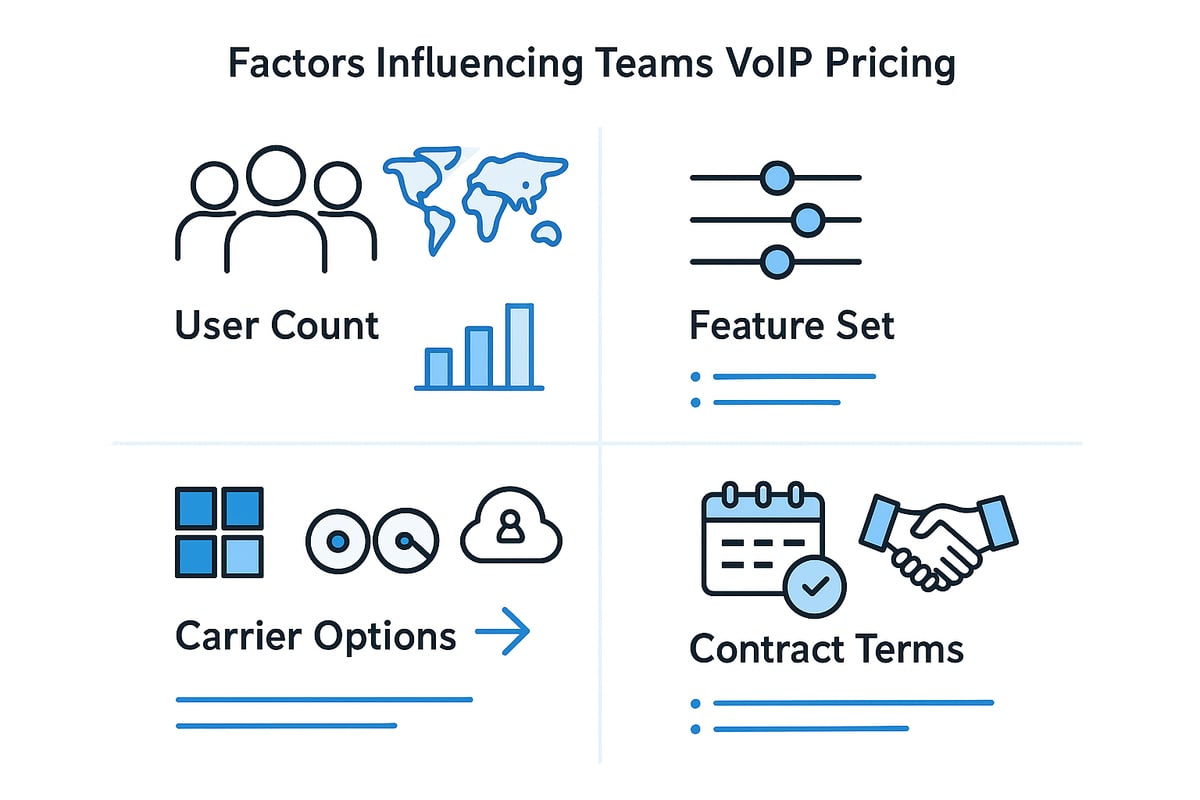
User Count and Geographic Distribution
The number of users significantly affects teams voip pricing, as most plans are billed per user. Larger organizations may qualify for volume discounts, but costs can add up quickly. Geographic distribution also matters. Pricing often varies by country due to local regulations, taxes, and currency fluctuations.
For example, a multinational company with 500 users spread across the US, UK, and Asia may pay different rates per region. Multi-country deployments often require additional compliance measures, impacting the overall teams voip pricing. Carefully analyze your user base and regions to estimate accurate costs and ensure compliance.
Feature Requirements and Customization
Feature selection is another major driver of teams voip pricing. Advanced options like call recording, analytics, or CRM integrations usually come at a premium. Customization needs - such as specialized workflows or unique compliance requirements - may also increase costs.
Here’s a quick table to illustrate:
| Feature | SMB Adoption | Enterprise Adoption | Cost Impact |
|---|---|---|---|
| Basic Calling | High | High | Low |
| Call Recording | Medium | High | Medium-High |
| Analytics | Low | High | Medium |
| CRM Integration | Low | Medium | High |
SMBs often stick to essentials, while enterprises invest in premium features, raising teams voip pricing. Balance must-have capabilities with your budget to avoid unnecessary costs.
Carrier Choice and Connectivity Options
Choosing between Microsoft and third-party carriers can greatly influence teams voip pricing. Microsoft’s native options offer simplicity and security, but third-party providers may deliver better rates or regional strengths. The choice between Operator Connect and Direct Routing also impacts flexibility and ongoing costs.
For a detailed comparison of leading providers and what each brings to the table, see the Best VoIP business phone service guide. Carrier selection affects monthly charges, service quality, and available features, making it essential to evaluate your options carefully.
Contract Terms and Support Levels
Contract length and support tiers are often overlooked, yet they strongly shape teams voip pricing. Monthly contracts offer flexibility, but annual agreements usually unlock better rates or volume discounts. Custom enterprise deals may include tailored support or SLAs, affecting both pricing and service quality.
Consider these tips when negotiating contracts:
- Request volume discounts for larger deployments.
- Compare standard vs. premium support costs.
- Negotiate for favorable SLAs and exit clauses.
Review all terms carefully to maximize value and minimize surprises in your teams voip pricing.
Comparing Leading Teams VoIP Providers and Solutions
Selecting the right provider is crucial for managing teams voip pricing and optimizing your organization's communication strategy. In 2025, the landscape is more competitive and diverse than ever, offering a variety of solutions tailored to different business needs.
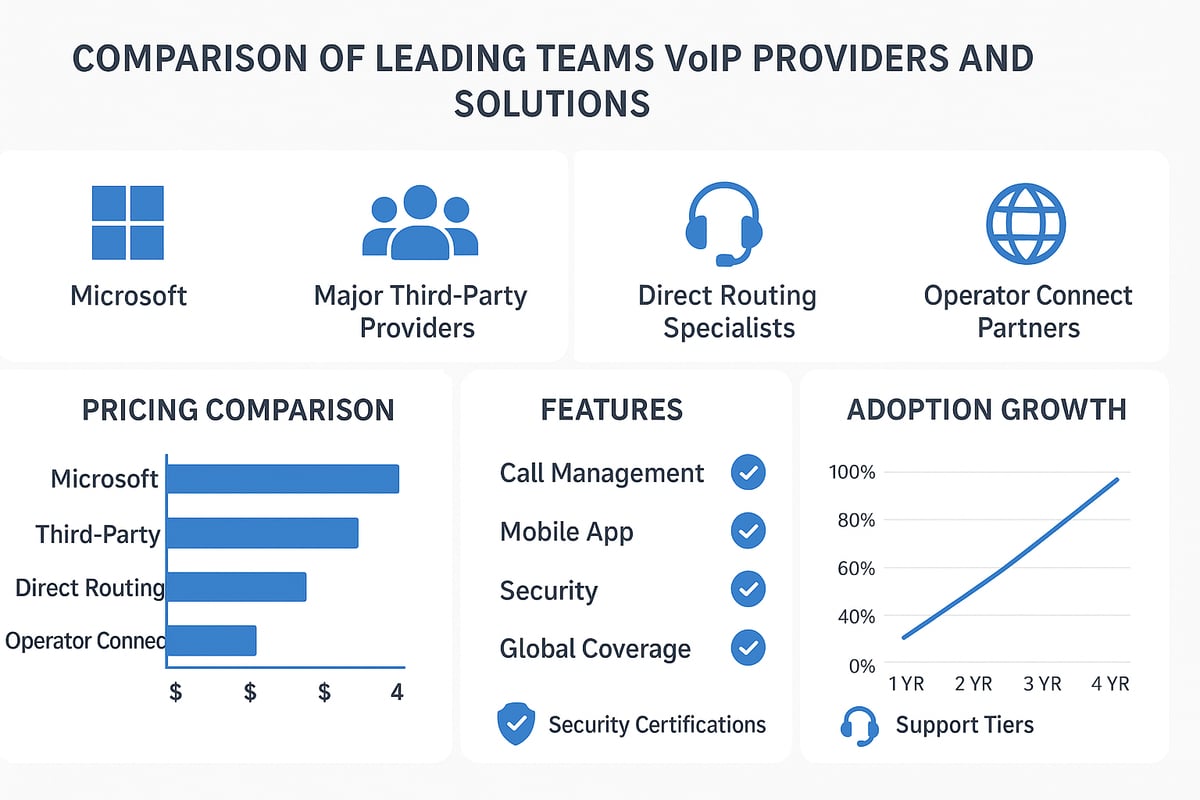
Microsoft Native Solutions
Microsoft offers two primary native options for Teams VoIP: Calling Plans and Operator Connect. Both are tightly integrated with the Teams ecosystem, ensuring a seamless experience for users and administrators alike.
Pricing is transparent, with clear tiers for domestic and international calling. Microsoft’s global coverage is a significant advantage, especially for organizations operating in multiple countries. Key benefits include robust security, centralized management, and direct support from Microsoft.
However, teams voip pricing with native solutions can be higher than alternatives, and flexibility may be limited when unique telephony requirements arise. For example, an enterprise operating solely within Microsoft’s environment may value integration and support over cost savings.
Major Third-Party Teams VoIP Providers
Leading third-party providers such as RingCentral, 8x8, BT, and NTT offer competitive alternatives to Microsoft’s native plans. These companies deliver a diverse range of features, often bundled with advanced analytics, integrations, and regional enhancements.
| Provider | Notable Features | Regional Strengths | Pricing Model |
|---|---|---|---|
| RingCentral | Analytics, integrations | North America, EU | Per-user, bundled |
| 8x8 | Global reach, analytics | EMEA, APAC | Per-user, flexible |
| BT | UK compliance, support | UK, EU | Per-user, custom |
| NTT | Enterprise focus | APAC, Global | Tiered, custom |
When evaluating teams voip pricing, it is essential to consider bundled features and regional support. For a UK-based business, comparing providers using a comprehensive Best VoIP phone service comparison can reveal hidden advantages and help you identify the best value.
Direct Routing Specialists
Direct Routing specialists such as AudioCodes and Ribbon Communications excel in providing customized solutions for organizations with complex telephony needs. These providers support integration with existing PBX systems, enabling a gradual migration to cloud-based calling.
Teams voip pricing with Direct Routing often involves upfront setup fees, ongoing carrier costs, and licensing. The flexibility to select your own telecom carrier can deliver significant savings for large enterprises, especially those with legacy infrastructure. For instance, a company migrating from on-premises PBX can use Direct Routing experts to bridge old and new systems without disrupting daily operations.
Operator Connect Partners
Operator Connect partners are gaining momentum as more organizations seek simplified Teams VoIP deployments. In 2025, leading carriers offer per-user, per-minute, and bundled pricing models, making teams voip pricing more predictable and manageable.
Key differentiators include rapid onboarding, enhanced support, and built-in analytics. Many mid-market companies choose Operator Connect for its balance of simplicity and control. According to Frost & Sullivan, Operator Connect adoption has grown by 30 percent year-over-year, reflecting its increasing appeal for organizations prioritizing agility.
Security, Compliance, and Reliability Considerations
Security and compliance are non-negotiable for organizations in regulated industries. Leading providers invest heavily in certifications such as ISO 27001, GDPR, and HIPAA, ensuring that teams voip pricing includes robust protection for sensitive data.
Uptime guarantees, geographic redundancy, and comprehensive compliance support are critical differentiators. For example, a financial services firm may require specialized compliance features and 99.99 percent uptime to meet regulatory obligations. Always verify that your chosen provider meets your industry’s specific standards.
Real-World Pricing Scenarios and Case Studies
Teams voip pricing varies widely based on organization size and industry. Small businesses may spend as little as $10 per user per month, while enterprises with global operations can see costs ranging from $15 to $40 per user, depending on advanced requirements.
Industry examples:
- Healthcare: Enhanced compliance and call recording drive up costs.
- Finance: Premium support and global coverage are essential.
- Education: Basic calling plans with limited add-ons keep expenses low.
A mid-market company that migrated from legacy PBX to Teams VoIP reported a 25 percent reduction in total communication costs within the first year, demonstrating the tangible ROI of modern solutions.
How to Evaluate and Choose the Best Provider
Choosing the right provider involves several key steps. Start by defining your communication needs and budget for teams voip pricing. Use the following checklist to guide your evaluation:
- Compare cost structures (per-user, bundled, usage-based)
- Assess feature sets and integration capabilities
- Review global coverage and support levels
- Request detailed quotes from multiple vendors
- Pilot test solutions before full deployment
For a growing business, following a structured selection process helps ensure you find a provider that aligns with both current requirements and future growth plans.
Strategies to Optimize Teams VoIP Costs
Optimizing your teams voip pricing strategy is essential for maximizing ROI and keeping communication budgets under control. With so many variables in play, organizations must proactively assess needs, negotiate effectively, and monitor usage to avoid unnecessary expenses.
Assessing Your Organization’s Needs
Begin your teams voip pricing journey by understanding your current telephony landscape. Inventory user counts, call volumes, and collaboration needs across departments. Identify which features are mission-critical, such as call recording or advanced analytics, and separate them from nice-to-have options.
A needs assessment template can help you gather information systematically, ensuring you do not overlook key requirements. Engage IT, HR, and end users for a 360-degree view. For more guidance on setup and cost considerations, review Microsoft Teams Phone: Cost, Top Features & Easy Setup Tips in 2025.
- List all users and locations
- Document current call patterns
- Note regulatory or compliance drivers
A thorough needs assessment lays the groundwork for accurate teams voip pricing projections.
Negotiating with Providers for Better Pricing
Negotiation is a powerful lever for optimizing teams voip pricing. Start by collecting detailed quotes from multiple vendors, including both Microsoft and third-party carriers. Use your organization’s size and projected usage as leverage for volume discounts or custom pricing agreements.
Consider bundling related services, such as conferencing or compliance recording, to secure better rates. Long-term contracts often yield additional savings, but be sure to clarify terms for flexibility and future growth.
Explore proven negotiation strategies in Microsoft Teams Voice Licensing: Cost Optimization and Vendor Consolidation Strategies for U.S. Enterprises.
- Request multiple proposals
- Highlight willingness to commit volume
- Ask about bundled service discounts
Effective negotiation can significantly lower your teams voip pricing over the contract term.
Leveraging Direct Routing and Operator Connect
Direct Routing and Operator Connect offer alternative paths to optimize teams voip pricing. Direct Routing allows you to connect Teams to your chosen telephony carrier, often resulting in lower call rates, greater flexibility, and better alignment with existing infrastructure.
Operator Connect streamlines onboarding and management, providing a middle ground between native Microsoft Calling Plans and full Direct Routing. Hybrid deployments can further tailor cost and complexity to match your organization’s needs.
Assess which model aligns best with your technical environment and budget. For some, Operator Connect’s simplicity outweighs the slightly higher price, while others benefit more from the control and savings of Direct Routing.
- Compare per-user and per-minute rates
- Evaluate onboarding and support requirements
- Consider hybrid for complex, multi-site rollouts
Choosing the right deployment model directly impacts your teams voip pricing efficiency.
Monitoring and Managing Ongoing Costs
Ongoing cost management is critical to keeping teams voip pricing predictable and sustainable. Use analytics tools to track call volumes, international usage, and feature adoption. Identify and deactivate unused licenses or features to prevent waste.
Schedule regular cost audits and compare actual spending against forecasts. Establish optimization cycles every quarter to adjust licensing, renegotiate contracts, or reallocate resources as business needs evolve.
According to Forrester, organizations save an average of 20 percent by actively monitoring and managing their VoIP expenses.
- Set up usage alerts in admin dashboards
- Review billing statements monthly
- Audit license utilization quarterly
Proactive management ensures your teams voip pricing stays aligned with real-world usage.
Future-Proofing Your Teams VoIP Investment
Future-proofing your teams voip pricing means planning for scalability, flexibility, and continuity. Anticipate growth by selecting providers and plans that scale without steep cost increases. Stay informed about upcoming Teams features or pricing changes to adjust your strategy promptly.
Guard against vendor lock-in by negotiating exit clauses or short-term commitments where possible. Develop business continuity plans to maintain communications if your primary provider experiences outages.
- Choose scalable providers and plans
- Track industry trends and pricing updates
- Create a VoIP business continuity plan
A forward-looking approach protects your teams voip pricing investment and supports long-term success.
Future Trends in Teams VoIP Pricing and Market Outlook for 2025
The landscape for teams voip pricing is evolving rapidly as organizations seek greater value and flexibility in their communications investments. Modern workplaces are demanding dynamic solutions that can adapt to shifting operational needs and global expansion. In this section, we explore the major forces shaping the future of teams voip pricing and what enterprises should anticipate in 2025.
Evolving Pricing Models and Market Competition
Teams voip pricing is shifting away from traditional flat-rate models. More providers are introducing usage-based and value-based pricing, where costs are tied to features and actual consumption. This approach gives organizations flexibility to scale up or down as needed. Increased competition among vendors is also driving prices lower, while bundled solutions are now more common.
For large organizations, evaluating Enterprise VoIP solutions overview can help clarify how bundled offerings and market competition affect teams voip pricing. Market analysts forecast further price reductions as new entrants and established players compete for enterprise customers. As a result, buyers will benefit from greater transparency and more tailored communications packages.
AI, Automation, and Value-Added Services
Artificial intelligence is becoming a key differentiator in teams voip pricing. Providers are enhancing their offerings with AI-driven call analytics, automated transcription, and intelligent call routing. These advanced features not only improve productivity but also provide measurable ROI for businesses.
Teams voip pricing will increasingly reflect the value of these services, with some providers bundling AI features into premium tiers. As automation reduces manual workloads, organizations can expect improved service efficiency and better user experiences. Investing in AI capabilities will be a significant consideration for enterprises evaluating long-term communications strategies.
Regulatory Changes and Global Expansion
Regulatory environments are playing a larger role in teams voip pricing. New data residency and privacy laws, such as GDPR, require providers to adapt their infrastructure and processes. This can result in regional price adjustments and added compliance costs, especially for organizations operating in multiple countries.
Emerging markets present both opportunities and challenges. As teams voip pricing models expand globally, providers must balance compliance with the need to offer competitive rates. Enterprises should closely monitor regulatory shifts to anticipate changes in pricing structures and ensure continued service availability across borders.
Predictions for Teams VoIP in 2025 and Beyond
Looking ahead, teams voip pricing will continue to evolve in response to technology advancements and changing workplace dynamics. Adoption rates are expected to rise, with Statista projecting a significant increase in global market size by 2025. Innovations in integration and interoperability will further drive value for businesses.
Remote and hybrid work models will remain a core factor influencing teams voip pricing trends. Enterprises will prioritize solutions that offer scalability, security, and cost control. For a deeper dive into scalable options, review the Enterprise VoIP solutions overview. Ultimately, organizations that stay informed and adaptable will be best positioned to optimize their communications investments in the years ahead.
You’ve just explored the ins and outs of Teams VoIP pricing for 2025, from understanding essential features and pricing structures to strategies for keeping your communication costs in check. If you’re ready to take the next step and experience truly reliable, enterprise-grade communication - complete with global reach, real-time analytics, and seamless integration - let’s put this knowledge into practice. Whether you’re managing a growing remote team or planning a global rollout, you can start optimizing your VoIP strategy right away. Ready to connect your business with confidence? Start now!
Ready to receive a verification code on a real mobile number?
Browse services