Receive SMS Online United States: Complete Guide
Learn how to receive SMS online in the United States using virtual US numbers. Protect your privacy, pass OTP verification, and avoid spam in 2026.
Iacopo Bonandi, Founder & CEO
June 8, 2026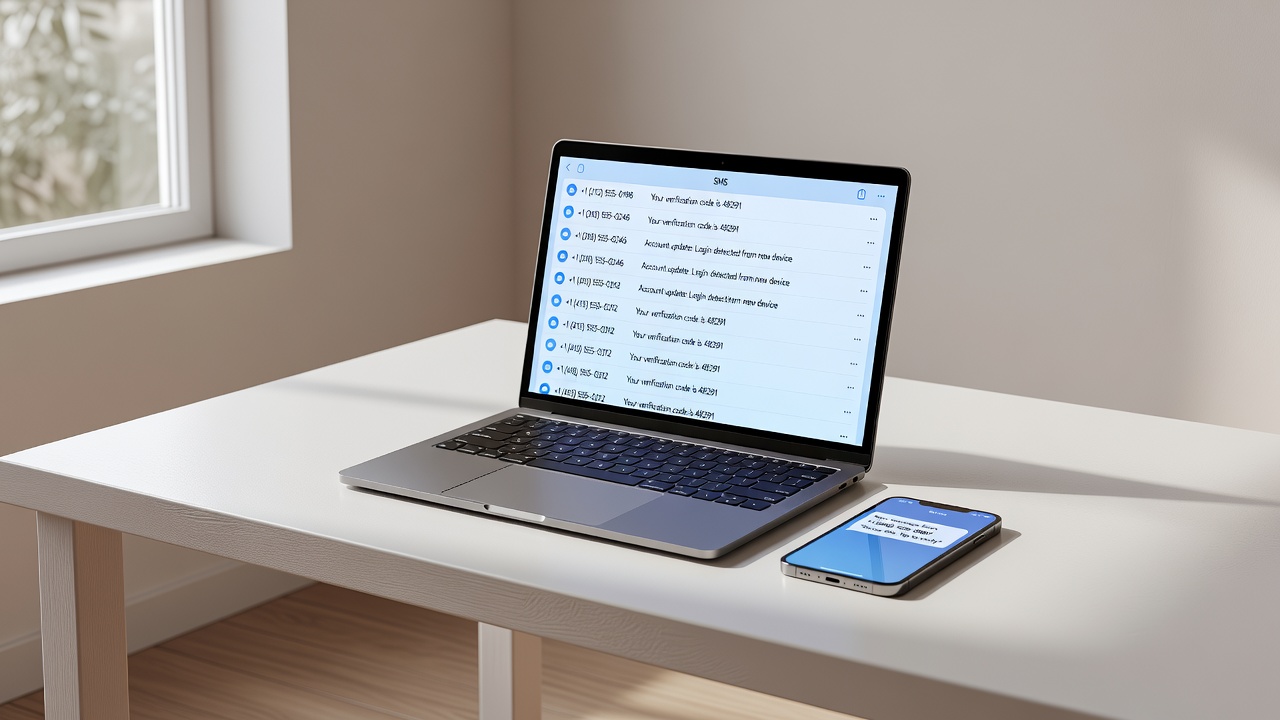
How to Receive SMS Online in the United States
If you need to receive SMS online United States — whether for OTP verification, account registration, or simply keeping your real number private — virtual US phone numbers offer a practical, legal, and increasingly popular solution. In 2026, millions of people worldwide use US-based virtual numbers to access American platforms, protect their personal information, and manage multiple online identities without carrying a second SIM card.
This guide explains exactly how the process works, what to look for in a service, and how to stay safe while using virtual numbers tied to United States area codes.
What Does It Mean to Receive SMS Online with a US Number?
A virtual US phone number is a real, dialable telephone number assigned to a US area code — such as +1 (212) for New York, +1 (310) for Los Angeles, or +1 (415) for San Francisco — but it is not connected to a physical SIM card or handset. Instead, incoming SMS messages are routed through VoIP (Voice over Internet Protocol) infrastructure and delivered to a web dashboard or app in real time.
This means:
- You don't need a US address or US SIM to get a number with a US area code.
- Messages appear instantly in a browser or mobile app, just as they would on a real phone.
- The number works for SMS verification on most major platforms that require a US phone number.
For a broader overview of how virtual numbers work across different scenarios, see this guide on how to receive SMS online without a real phone number.
Why People Specifically Need a US Number
Many global platforms restrict registration or certain features to users with a verified United States phone number. Common use cases include:
- Streaming and entertainment services that require US number verification
- E-commerce and marketplace platforms (eBay, Amazon seller accounts, Craigslist)
- Financial technology apps with US-only onboarding
- Social media accounts targeting a US audience
- Business communications where a US presence adds credibility
- Developers and QA testers who need to simulate US-based user registration flows
Because these platforms send a one-time password (OTP) via SMS, having a US number that can receive that code is the critical requirement — not a physical device in the United States.
How Virtual US Numbers Work for SMS Verification
When you sign up for a virtual US number service, you are assigned a number from a pool of real, carrier-registered US numbers. When a platform sends an OTP or verification SMS to that number, the message travels through standard SMS infrastructure and is then forwarded to the provider's platform, where you view it via your account dashboard.
The technical foundation relies on VoIP and SS7 (Signaling System No. 7) gateway integration. According to IETF documentation on SIP (RFC 3261), SIP-based systems can handle SMS delivery alongside voice, which is what many virtual number providers use under the hood.
For practical tips on completing OTP flows quickly and privately, the guide on fast and private SMS verification covers the step-by-step process in detail.
Temporary vs. Long-Term Virtual US Numbers
Not all virtual US number services are identical. There are two main categories:
Temporary / Disposable US Numbers
These are shared or single-use numbers designed for one verification event. They are typically free or very low cost. The trade-off is that multiple users may share the number, meaning your received messages could be visible to others — making them unsuitable for sensitive accounts.
Best for: One-time signups, testing, low-stakes verifications.
Dedicated / Private US Numbers
These numbers are assigned exclusively to you. Nobody else sees your incoming messages. They can be renewed monthly and used for ongoing communications, repeated logins, and business purposes.
Best for: Business accounts, repeated verifications, any account you intend to keep long-term.
If privacy is a priority, learn more about receiving SMS online safely without a real number before choosing a service type.
Choosing a US Area Code That Works
Not all US area codes carry equal weight with verification systems. Some platforms have started blocking numbers from certain VoIP-heavy area codes. When selecting a US virtual number, consider:
- Major metropolitan area codes (212, 310, 312, 404, 617, 713, 818) tend to have higher acceptance rates on mainstream platforms.
- Toll-free numbers (+1 800, 888, 877, etc.) are generally not accepted for SMS verification — stick to geographic area codes.
- Port-in numbers (numbers ported from real carriers) typically have better deliverability than freshly provisioned VoIP numbers.
Ask your provider whether their US numbers are registered through Tier-1 US carriers or direct VoIP allocation, as this affects which platforms will accept them.
Privacy and Security Considerations
Using a virtual US number to protect your real phone number is a legitimate privacy practice. By keeping your personal number off websites and services, you reduce:
- Spam and robocalls to your real number
- Data broker exposure (many services sell phone number data)
- SIM-swap attack risk (attackers can't target a number you don't actually own)
- Doxxing vulnerability in online communities
According to Wikipedia's overview of virtual phone numbers, these numbers have been used commercially since the early 2000s and are widely recognized as a standard business and privacy tool.
For a deeper look at staying anonymous during online registration, the article on anonymous SMS verification and staying private online is worth reading alongside this guide.
What to Look for in a US Virtual Number Provider
When evaluating services in 2026, prioritize these factors:
- Real US carrier integration — Numbers should be registered through recognized US telecommunications channels, not purely over-the-top VoIP.
- Instant SMS delivery — Delays over 60 seconds can cause OTP codes to expire.
- Dashboard reliability — A clear, fast web interface or mobile app for reading messages.
- Number exclusivity — For anything beyond one-time use, ensure the number is private to your account.
- Compliance and legal operation — The provider should operate within US telecommunications law (FCC regulations) and GDPR or equivalent data protection frameworks if you're outside the US.
- Customer support — Responsive support matters when a verification flow fails at a critical moment.
For a comparison of what secure, free, and paid options look like in practice, the guide on free and secure virtual numbers for receiving SMS online provides useful context.
Common Pitfalls to Avoid
- Using public shared numbers for sensitive accounts: If a number appears on a public SMS-receive website, it's been used by thousands of people. Any account tied to it can be accessed by anyone who visits that page.
- Expecting 100% platform compatibility: Some platforms (notably banks and certain government services) explicitly block VoIP-originated numbers. This is by design and is not a provider flaw.
- Ignoring number recycle risk: When you stop paying for a temporary number, it may be reassigned. Accounts linked to that number could then be accessed by the next holder.
- Confusing SMS capability with voice: Not all virtual US number plans include voice calling. If you only need SMS verification, an SMS-only plan is usually cheaper and sufficient.
FAQ
Can I use a virtual US number to verify any American app or website?
Most consumer apps and websites that require SMS verification will accept virtual US numbers, particularly from reputable providers with carrier-grade infrastructure. However, some financial institutions, government portals, and certain social platforms actively screen for VoIP numbers using carrier lookup APIs and may reject them. For general-purpose verification, virtual US numbers work in the vast majority of cases.
Is it legal to receive SMS online using a virtual United States number?
Yes. Using a virtual phone number to receive SMS is legal in the United States and in most countries globally. Virtual numbers are a standard business and privacy tool regulated under FCC guidelines. The legality depends on how you use the number — providing false identity information during a regulated financial process (KYC), for example, is a separate legal matter unrelated to the number type itself.
How quickly do SMS messages arrive on a virtual US number?
With a quality provider that has direct carrier integration, SMS messages typically arrive within 5 to 30 seconds of being sent — fast enough for OTP codes, which usually have a 60- to 300-second expiry window. Delivery speed can be slower with budget or shared-infrastructure providers, so testing delivery time before relying on a number for critical verifications is recommended.
Get Your Virtual US Number Today
Ready to receive SMS online with a United States number without exposing your real phone? VoIP Store offers dedicated, private virtual US numbers with instant SMS delivery, a clean web dashboard, and reliable carrier-grade infrastructure. Whether you need a single verification or an ongoing US presence, there's a plan that fits your needs. Visit VoIPStore.xyz now to browse available US numbers and get started in minutes.
Ready to receive a verification code on a real mobile number?
Browse services